I’ve been building and studying device systems long enough to know that most people have no idea what actually makes a car drive itself.
You’ve heard the word “autonomous” thrown around everywhere. But what’s really under the hood? What sensors are watching the road? What computers are making split-second decisions?
The tech is more specific than you think.
What are autonomous vehicles? They’re machines packed with hardware most people never see. Lidar units. Radar arrays. Processing chips running millions of calculations per second.
Here’s the thing: the hype around self-driving cars skips over the actual devices doing the work.
I’m going to break down the core components. The sensors that see. The computers that think. The systems that connect everything together.
This isn’t about the future of transportation or big promises. It’s about the hardware that exists right now and how it actually works.
You’ll learn what each piece does and why it matters. No fluff. Just the devices and the engineering that makes autonomous driving possible.
The Sensory System: How Autonomous Vehicles Perceive Their Environment
Think about how you drive.
You use your eyes to spot pedestrians. Your ears pick up sirens. You feel the road through the steering wheel.
What are autonomous vehicles fntkdevices? They’re machines that need to do all of this without human senses. So they rely on something different.
A suite of sensors that work together to build a picture of the world around them.
LiDAR: The Distance Expert
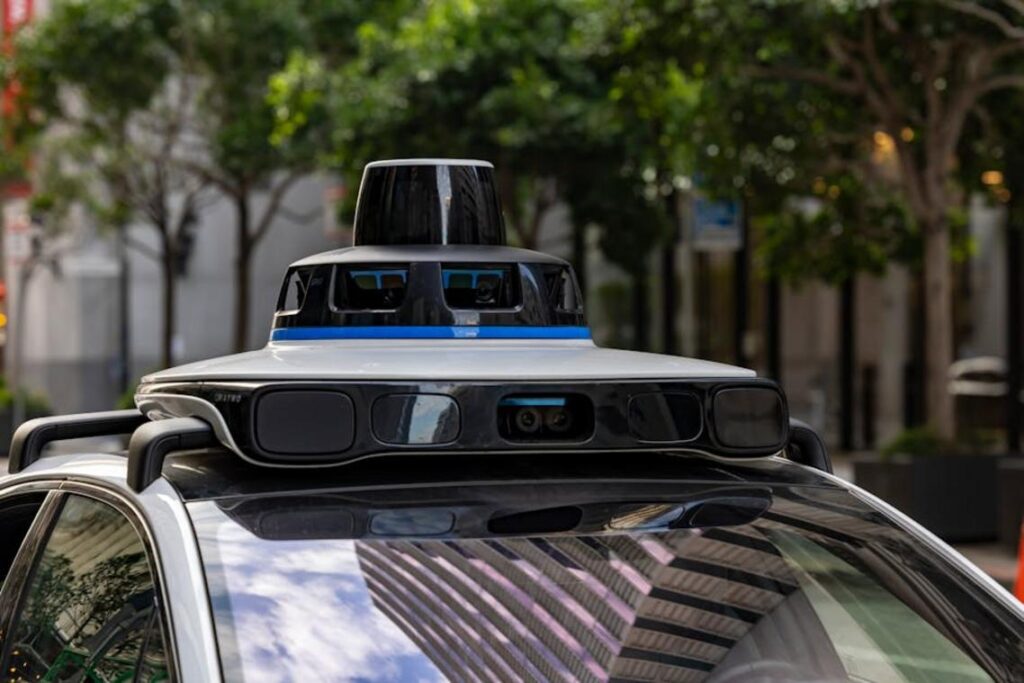
LiDAR shoots out laser pulses and measures how long they take to bounce back.
The result? A detailed 3D map of everything around the vehicle. Trees, cars, mailboxes, people. All measured down to the centimeter.
Here’s what makes it useful. LiDAR doesn’t care if it’s noon or midnight. It works the same either way because it creates its own light source.
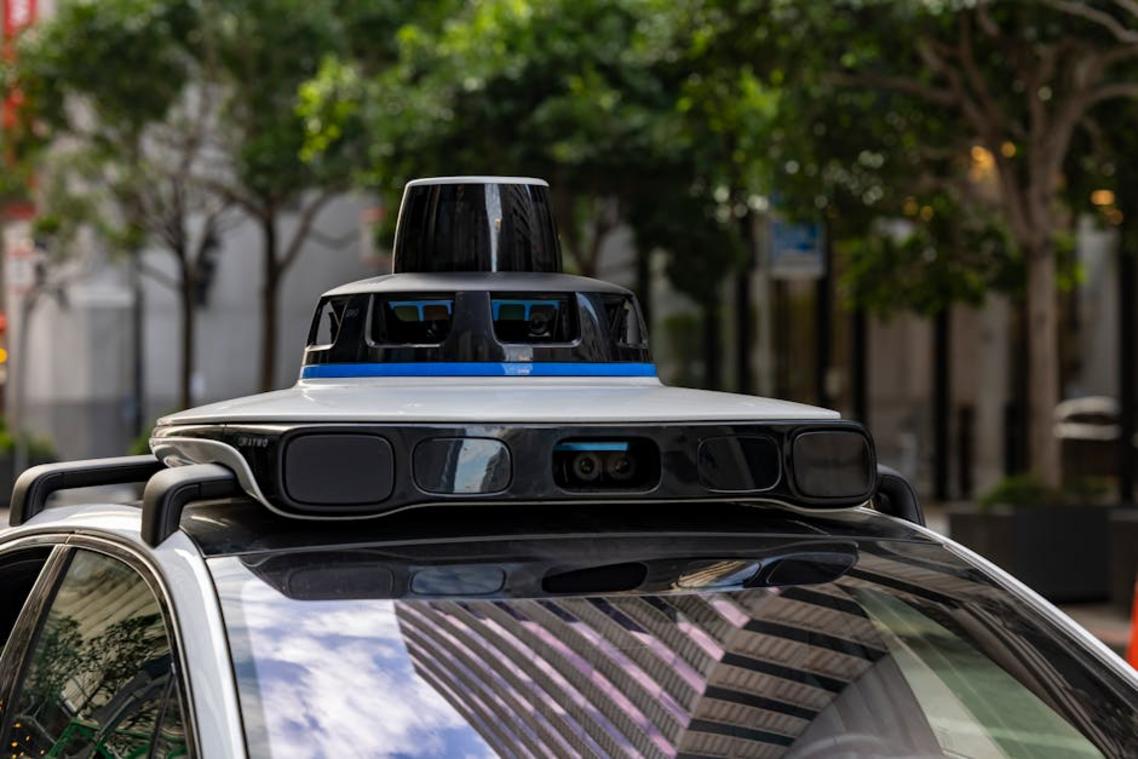
But I’m guessing we’ll see costs drop by 60% in the next three years as solid-state versions replace the spinning units on top of test vehicles. That’ll make them practical for regular cars.
Cameras: The Visual Interpreter
Cameras do what LiDAR can’t. They read text on stop signs. They distinguish between a yellow light and a red one. They spot lane markings on the pavement.
Most autonomous systems use six to eight cameras positioned around the vehicle. Each one captures high-definition video that gets processed in real time.
The catch? All that visual data needs serious computing power to make sense of it. You’re talking about identifying thousands of objects per second and deciding which ones matter.
My prediction is that by 2027, we’ll see camera systems that can read driver hand signals and interpret construction worker gestures. The processing algorithms are getting that good.
Radar: The All-Weather Backup
Radar uses radio waves instead of light.
It tells you how fast something is moving and how far away it is. A car merging into your lane. A motorcycle three cars ahead that just hit the brakes.
The big advantage? Rain and fog don’t stop radio waves. When cameras can’t see through heavy weather and LiDAR struggles with dense precipitation, radar keeps working.
I think radar will become the primary sensor within five years for highway driving. It’s just more reliable when conditions get rough, and highways are where autonomy will go mainstream first.
The Central Computer: The Brain Making Real-Time Decisions
You know how your laptop sometimes freezes when you have too many tabs open?
Now imagine asking it to process millions of data points every second while keeping you alive at 70 mph.
That’s why autonomous vehicles need something way more capable than a regular computer. We’re talking about specialized hardware that can handle what I call the “everything, everywhere, all at once” problem (and yes, that movie reference is intentional). To tackle the complexities of real-time decision-making in autonomous vehicles, developers are increasingly turning to advanced solutions like Fntkdevices, which offer the specialized processing power needed to address the “everything, everywhere, all at once” challenge. To effectively navigate the intricate challenges of autonomous driving, developers are increasingly turning to advanced architectures like Fntkdevices, which are specifically designed to process vast amounts of data in real-time and solve the “everything, everywhere, all at once” problem.
Let me break down what’s actually happening inside these systems.
Sensor Fusion: Building One Picture from Many Sources
Here’s where things get interesting.
Your autonomous vehicle has LiDAR scanning the environment, cameras capturing visual details, and radar tracking movement. Each sensor sees the world differently. LiDAR is great with distance but struggles in heavy rain. Cameras read signs perfectly but get confused by direct sunlight. Radar works in fog but can’t tell a plastic bag from a pedestrian.
So what does the central computer do?
It takes all these overlapping data streams and combines them into one complete model of what’s around you. This process is called sensor fusion, and it’s basically how the car decides what’s real and what matters.
Think of it like this. If your camera says there’s something ahead but LiDAR and radar agree there’s nothing there, the computer knows to trust the majority. The system gets redundancy built in, which means if one sensor fails or gets blocked, the others cover for it.
Why Standard Processors Can’t Cut It
Some people think you could just use a really fast regular CPU for this.
You can’t.
Standard processors handle tasks one after another. But what are autonomous vehicles fntkdevices building need to do? They need to run trillions of operations per second, all at the same time, with zero lag.
That’s where specialized computing units come in.
Most systems use GPUs (graphics processing units) or custom SoCs (system-on-chip designs). These chips are built to handle massive parallel processing. They can analyze sensor data, run prediction models, and calculate driving decisions simultaneously.
We’re talking about hardware that makes your gaming PC look like a calculator.
Path Planning: Predicting What Happens Next
Now the computer has a complete picture of the world around you. What does it do with that information?
It needs to figure out where everyone else is going and plot your safest route through it all.
This is path planning, and it’s probably the most complex part of the whole system. The software analyzes the fused sensor data and starts making predictions. Will that car in the next lane merge? Is that pedestrian about to step off the curb? Should we change lanes now or wait three seconds?
The algorithms run through thousands of possible scenarios in milliseconds. They calculate the safest path forward while also considering efficiency (because nobody wants a self-driving car that drives like your overly cautious aunt).
Every decision about acceleration, braking, steering, and lane changes comes from this analysis. And it all happens faster than you can blink.
Connectivity and Communication: The Vehicle’s Link to the World
I remember the first time I saw a car brake for something that wasn’t even visible yet.
I was riding in a test vehicle outside Detroit when it suddenly slowed down at a green light. Two seconds later, a delivery truck blew through the red light on the cross street.
The car knew before I did.
That’s when it hit me. These what are autonomous vehicles fntkdevices aren’t just processing what their cameras see. They’re talking to everything around them.
Now, some people argue that cars don’t need to communicate with external systems. They say good sensors and smart software should be enough. Just make the car see better and react faster.
Fair point. But here’s what that misses.
Your sensors only work within line of sight. A camera can’t see around corners. Radar can’t predict what a traffic light will do three blocks ahead.
V2X communication changes that equation completely.
V2X stands for Vehicle-to-Everything. It’s exactly what it sounds like. Your car sends and receives data from other vehicles (V2V), traffic infrastructure like signals and signs (V2I), and even pedestrians’ phones (V2P). As the automotive industry embraces the transformative potential of V2X technology, the integration of Fntkdevices is set to revolutionize how vehicles communicate with their surroundings, enhancing safety and efficiency on the roads. As the automotive industry embraces the transformative potential of V2X technology, integrating systems like Fntkdevices will be crucial for enabling seamless communication between vehicles and their surroundings. For additional context, The Role of Modern Devices Fntkdevices covers the related groundwork.
Think of it like this. Right now, you’re driving blind to anything beyond what you can physically see. With V2X, your car knows an ambulance is approaching from behind before you hear the siren. It knows the light ahead is about to turn red. It knows a pedestrian is about to step off the curb on the other side of that parked bus.
The car in Detroit that day? It got a signal from the intersection that another vehicle was running the red light.
But communication is only half the story.
HD mapping gives these vehicles something standard GPS never could. We’re not talking about the maps on your phone that show you which street to turn on.
HD maps are different. They’re accurate down to the centimeter. They know exactly where lane lines are, how the road curves, where the curbs sit, what every sign says.
And they update constantly through cloud connections. A construction zone pops up? The map knows within hours, sometimes minutes.
Your regular GPS might get you within a few meters of where you need to be (which is fine when you’re the one driving). But when software is controlling a two-ton vehicle at highway speeds, a few meters is the difference between staying in your lane and drifting into someone else’s.
These maps work with the car’s sensors to create what I call a reality check. The sensors see what’s happening right now. The map confirms what should be there and flags anything that’s changed.
Together, V2X and HD mapping give autonomous vehicles awareness that goes way beyond human capability. You and I can only process what we see and hear in the moment. These systems let cars anticipate what’s coming and navigate with precision we can’t match.
That’s the real shift here. We’re moving from cars that react to what they encounter to cars that know what’s ahead before they get there.
Actuators and Control Systems: Putting Decisions into Action
Your car doesn’t have a steering column anymore.
At least, that’s where we’re headed with autonomous vehicles. And honestly, it’s better that way.
Here’s what I mean. Traditional cars use mechanical linkages. You turn the wheel, and a physical shaft connects to the steering rack. You press the brake pedal, and hydraulic fluid pushes against the calipers.
Drive-by-wire changes everything.
The computer sends electronic signals to actuators that handle steering, throttle, and brakes. No mechanical connection between you (or the AI) and the wheels.
Think of it like a video game controller. When you press a button, there’s no physical wire pulling a trigger. It’s all electronic signals.
So what’s in it for you? We explore this concept further in Fntkdevices Hi Tech Devices by Fitness-Talk.
First, precision. Electronic systems respond faster than you can blink. The computer can adjust steering angle or brake pressure hundreds of times per second. Try doing that with a mechanical system.
Second, space. Without all those mechanical parts, designers can rethink the entire vehicle layout. More room for batteries. Better crash protection. Flexible interior configurations.
But here’s the part that matters most.
Redundancy.
When you’re learning about what are autonomous vehicles fntkdevices, you’ll see that safety comes from backup systems. If one actuator fails, another takes over. If the primary computer glitches, a secondary system kicks in. Just as autonomous vehicles rely on redundant systems to ensure safety, the E-Cigarettes Guide Fntkdevices offers essential insights into reliable vaping options that prioritize user experience and safety. Just as autonomous vehicles depend on redundant systems to maintain safety, the evolving landscape of vaping technology, as detailed in the E-Cigarettes Guide Fntkdevices, highlights the importance of reliability and innovation in enhancing user experience.
That’s something mechanical systems can’t match. You can’t have a backup steering column.
The result? Vehicles that respond exactly as intended, every single time.
An Integrated System of Advanced Devices
You came here to understand what makes autonomous vehicles work.
I’ve shown you the sensors that let these cars see. The computers that process millions of data points per second. The software that makes split-second decisions. The actuators that turn those decisions into movement.
Here’s the thing: no single component makes a car autonomous.
The real breakthrough is how these pieces work together. A camera spots a pedestrian. Lidar measures the distance. Radar tracks the movement. The computer processes all of it at once and tells the brakes to engage.
That’s what are autonomous vehicles fntkdevices actually are. They’re systems where hardware and software blend into something that can navigate our world.
The technology keeps getting better. Sensors become more accurate. Processors get faster. Software learns from billions of miles of driving data.
Watch how these systems integrate over the next few years. That integration will determine which companies lead the autonomous revolution and how quickly self-driving cars become part of daily life.
The future of transportation isn’t just about smarter devices. It’s about making them work as one.
 Tyvian Esthoven is the kind of writer who genuinely cannot publish something without checking it twice. Maybe three times. They came to tech innovation updates through years of hands-on work rather than theory, which means the things they writes about — Tech Innovation Updates, Emerging Interface Technologies, Device Optimization Techniques, among other areas — are things they has actually tested, questioned, and revised opinions on more than once.