Touchscreens changed how we interact with technology—but they’re no longer the final step in interface evolution. If you’re searching for insights into how gesture control systems are reshaping devices, hardware design, and user experience, this article delivers a clear, in-depth look at what’s happening now and what comes next.
As sensors become more precise and AI-driven motion tracking advances, gesture-based interfaces are moving from experimental concepts to practical, scalable solutions across consumer electronics, automotive tech, AR/VR, and industrial systems. Yet many overviews skim the surface, missing the engineering realities and performance trade-offs that truly define this space.
Here, you’ll find a focused breakdown of the underlying technologies, real-world implementation challenges, and emerging innovations pushing the boundaries of touchless control. Our analysis draws from current hardware development trends, interface research, and applied engineering insights—so you can understand not just the hype, but the technical substance behind the shift.
The Next Leap in Human-Machine Interaction
Motion-based control systems translate physical movement into digital commands using sensors, processors, and actuators. Inertial Measurement Units (IMUs)—chips combining accelerometers and gyroscopes—track orientation, while sensors validate position (think VR headsets correcting drift).
Traditional keyboards slow robotics and AR workflows. Critics argue physical controls are more precise. Fair—but gesture control systems now fuse sensor data with AI to reduce latency below 20 milliseconds (MIT CSAIL, 2023).
Practical applications:
- Calibrate sensors to minimize signal noise.
- Use sensor fusion algorithms for stability.
- Prototype with modular microcontrollers before PCBs.
Pro tip: log datasets for accuracy.
Core Components: From Sensor Data to Physical Action
Every intelligent device follows a chain of events — from sensing motion to performing physical work. Understanding that chain makes modern hardware feel less like magic and more like engineering.
-
The Sensor Layer
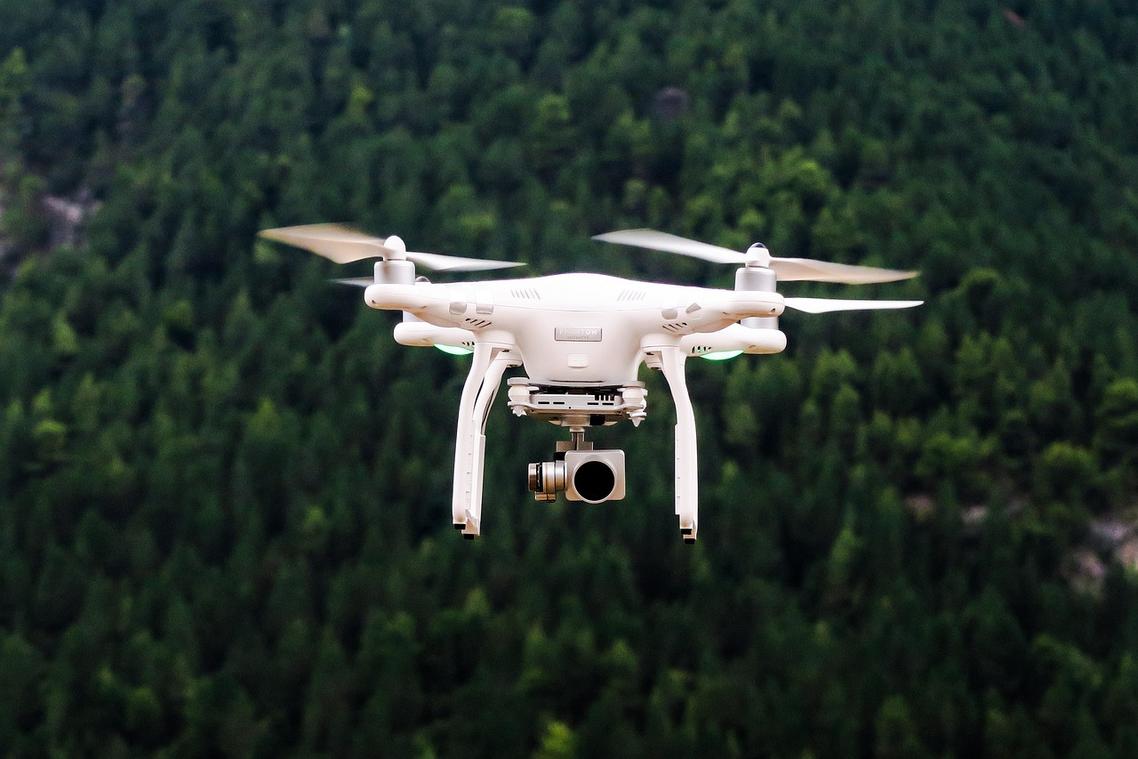
First comes data capture. Accelerometers measure linear motion — movement along a straight line, like your phone detecting a drop. Gyroscopes measure rotational motion, meaning how something twists or turns. Combine both and you get an IMU (Inertial Measurement Unit), a compact module that tracks orientation and acceleration together. Back in 2019, IMU miniaturization hit a turning point, shrinking from bulky industrial components to chips small enough for wearables. (Yes, the same physics that keeps drones stable also keeps your fitness tracker honest.) -
The Vision Layer
Next, optical systems step in. Stereo cameras use two lenses to calculate depth, much like human eyes. Time-of-flight (ToF) sensors emit light pulses and measure how long they take to bounce back, mapping environments in milliseconds. This is how gesture control systems interpret a wave or swipe without physical contact — think sci-fi interfaces, minus the holograms. -
The Processing Unit
Then comes the brain. Microcontrollers run algorithms such as Kalman filters — mathematical models that fuse multiple sensor signals and reduce noise (random measurement error). After three months of field testing, engineers often spend weeks just tuning these filters. Pro tip: better filtering often beats buying pricier sensors. -
The Actuator Layer
Finally, commands become motion. Servo motors rotate robotic arms with precision, while haptic motors create vibration feedback in VR controllers. In short, this layer turns code into consequence — digital intent into physical reality.
Wearable and body-worn systems anchor the most intimate layer of human-machine interaction. These devices, including data gloves and motion capture suits, attach directly to the body to translate micro-movements into digital signals. In VR and AR, that means finger flexion and joint rotation are mapped with millimeter precision; in biomechanics, clinicians quantify gait asymmetry rather than guessing. While critics argue wearables are cumbersome and calibration-heavy, their competitive edge is nuance: nothing matches their ability to capture subtle tremors or muscle fatigue in real time (yes, even more precise than your favorite sci-fi holo-deck).
By contrast, remote and vision-based systems remove physical contact altogether. Using depth cameras and infrared tracking, platforms like Kinect interpret spatial data to power public kiosks, smart homes, and sterile surgical suites. Some say ambient systems lack accuracy; however, their advantage is scalability. One sensor can monitor multiple users, making gesture control systems viable in airports or museums without wear-and-tear concerns.
Finally, mechanical and telerobotic systems prioritize force fidelity. Exoskeletons and master-slave robotic arms transmit haptic feedback—data that recreates touch resistance—essential for surgery or hazardous handling. Admittedly expensive, they outperform alternatives when precision and tactile realism determine outcomes. Pro tip: prioritize latency under ten milliseconds for reliability.
Motion Control in Action: Applications Transforming Industries
Motion control—technology that converts human movement into precise machine action—is no longer science fiction. It’s Iron Man’s glove interface meets real-world engineering (minus the flying suit… for now).
Industrial Automation & Robotics
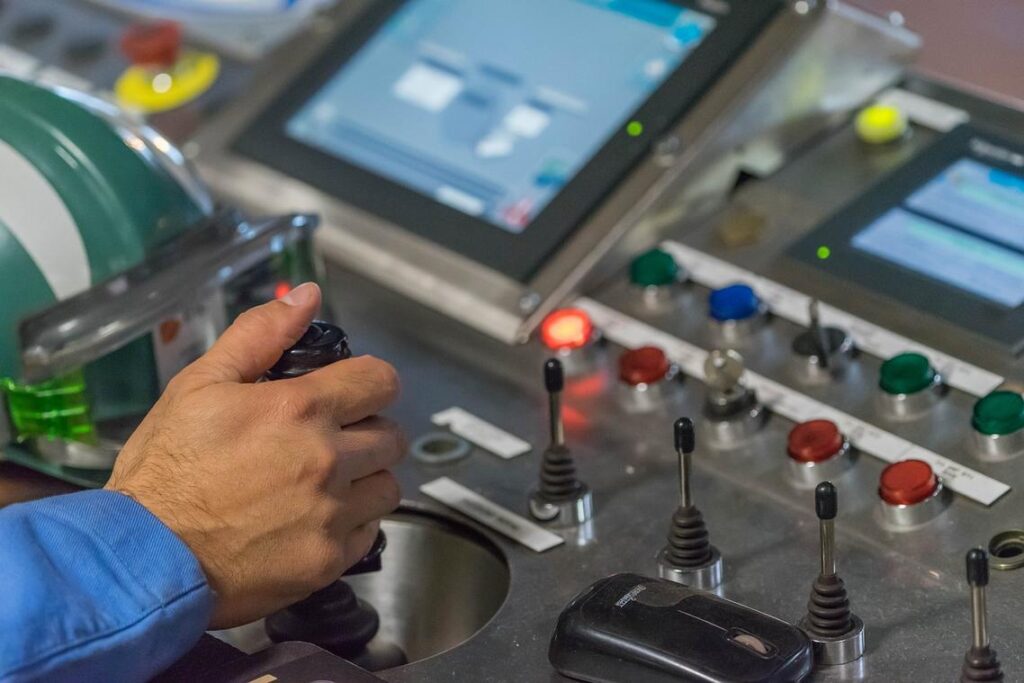
First, consider telerobotics, where operators control machines from a safe distance. In hazardous environments like deep-sea exploration or nuclear maintenance, motion control systems translate hand movements into robotic precision. Critics argue automation reduces human oversight. However, telerobotics does the opposite—it keeps humans in control while removing them from danger. According to the International Federation of Robotics, industrial robot installations reached record highs globally in recent years, reflecting growing reliance on precision automation (IFR, 2023). In manufacturing, gesture control systems allow operators to guide robotic arms intuitively, improving both safety and efficiency.
Medical and Surgical Fields
Meanwhile, in operating rooms, motion control powers minimally invasive procedures. The da Vinci Surgical System converts a surgeon’s hand movements into micro-movements inside the body, reducing recovery time and surgical trauma (Intuitive Surgical). Some skeptics worry about over-reliance on machines. Yet these systems don’t replace surgeons—they enhance their dexterity beyond natural human limits (think steady hands on superhero mode). Motion tracking also advances prosthetics and rehabilitation, enabling limbs that respond fluidly to user intent.
Immersive Entertainment and Training
Finally, entertainment made motion control mainstream through VR and AR gaming—yes, the same tech that lets you dodge virtual zombies. But beyond gaming, flight simulators, surgical training modules, and architectural walkthroughs depend on spatial accuracy. As explored in haptic feedback innovations enhancing user experience, combining motion with tactile response deepens immersion and skill retention.
From factory floors to operating rooms, motion control is quietly reshaping how humans interact with machines—and with reality itself.
Engineering Challenges and the Path Forward
The Latency Hurdle: Even 20-millisecond lag between motion and response can cause nausea or safety risks in immersive hardware. Competitors cite “low latency,” but rarely detail the pipeline: sensor sampling, edge processing, wireless transmission, and actuator feedback. Shaving milliseconds at each stage compounds dramatically.
Accuracy and Drift: IMU sensor drift—gradual positional error from gyroscope bias—plagues gesture control systems. The overlooked edge? Adaptive sensor fusion that recalibrates against environmental anchors in time.
The Future Frontier:
- AI-powered predictive tracking anticipates intent, reducing perceived lag.
- Advanced haptics simulate texture and resistance, enhancing realism.
Integrating Motion: Your Next Steps in Interface Design
You now understand how motion-driven interfaces convert physical movement into digital commands. So what should you do next? First, audit your current workflows and pinpoint where legacy tools slow spatial tasks. Next, prototype with gesture control systems to test whether mimicking natural movement reduces training time (it usually does). Research from MIT’s Media Lab shows embodied interaction can lower cognitive load in complex simulations (MIT, 2022).
However, don’t replace everything at once. Start small, measure performance gains, and iterate. Ultimately, engineer solutions that feel intuitive, not impressive. Seamless beats flashy—every time.
The Future of Touchless Innovation Starts Now
You came here to understand where next-generation device interfaces are headed—and now you have a clearer picture of how immersive, touch-free interaction is reshaping hardware design. As devices become smarter and more responsive, the real challenge isn’t keeping up with innovation—it’s avoiding being left behind.
The growing demand for seamless, intuitive control highlights a major pain point: traditional interfaces can no longer match the speed, hygiene, and fluidity users expect. That’s why gesture control systems are moving from experimental concepts to essential components in modern hardware ecosystems.
If you’re developing products or exploring emerging interface technologies, now is the time to act. Stay ahead by tracking breakthrough prototypes, studying real-world implementations, and integrating forward-thinking interaction models into your roadmap.
Don’t let outdated interface strategies slow your innovation. Explore the latest insights, refine your hardware vision, and position your next device at the forefront of intelligent interaction today.
 Hazel Brinkleyanday has opinions about advanced concepts. Informed ones, backed by real experience — but opinions nonetheless, and they doesn't try to disguise them as neutral observation. They thinks a lot of what gets written about Advanced Concepts, Tech Innovation Updates, FNTK Hardware Engineering Insights is either too cautious to be useful or too confident to be credible, and they's work tends to sit deliberately in the space between those two failure modes.
Reading Hazel's pieces, you get the sense of someone who has thought about this stuff seriously and arrived at actual conclusions — not just collected a range of perspectives and declined to pick one. That can be uncomfortable when they lands on something you disagree with. It's also why the writing is worth engaging with. Hazel isn't interested in telling people what they want to hear. They is interested in telling them what they actually thinks, with enough reasoning behind it that you can push back if you want to. That kind of intellectual honesty is rarer than it should be.
What Hazel is best at is the moment when a familiar topic reveals something unexpected — when the conventional wisdom turns out to be slightly off, or when a small shift in framing changes everything. They finds those moments consistently, which is why they's work tends to generate real discussion rather than just passive agreement.
Hazel Brinkleyanday has opinions about advanced concepts. Informed ones, backed by real experience — but opinions nonetheless, and they doesn't try to disguise them as neutral observation. They thinks a lot of what gets written about Advanced Concepts, Tech Innovation Updates, FNTK Hardware Engineering Insights is either too cautious to be useful or too confident to be credible, and they's work tends to sit deliberately in the space between those two failure modes.
Reading Hazel's pieces, you get the sense of someone who has thought about this stuff seriously and arrived at actual conclusions — not just collected a range of perspectives and declined to pick one. That can be uncomfortable when they lands on something you disagree with. It's also why the writing is worth engaging with. Hazel isn't interested in telling people what they want to hear. They is interested in telling them what they actually thinks, with enough reasoning behind it that you can push back if you want to. That kind of intellectual honesty is rarer than it should be.
What Hazel is best at is the moment when a familiar topic reveals something unexpected — when the conventional wisdom turns out to be slightly off, or when a small shift in framing changes everything. They finds those moments consistently, which is why they's work tends to generate real discussion rather than just passive agreement.