

As computing demands surge beyond the limits of traditional silicon, many innovators are turning their attention to photonic computing applications to unlock faster processing, lower latency, and dramatically improved energy efficiency. If you’re exploring how light-based computation could reshape AI workloads, data centers, telecommunications, or advanced sensing systems, this article is designed to give you clear, technically grounded insight.
We break down where photonic architectures stand today, which real-world applications are gaining traction, and what engineering challenges still need to be solved. Rather than speculative hype, you’ll find analysis rooted in current hardware research, emerging interface technologies, and practical device design considerations.
By the end, you’ll understand how photonic systems compare to electronic counterparts, where they offer measurable advantages, and what developments to watch as this field moves from research labs into scalable, deployable technology.
Electronic chips move data as electrons, which generate heat and face resistance. Photonic computing, by contrast, sends information as light through waveguides—tiny channels etched into silicon. In simple terms, photons travel faster and waste less energy, easing the bottleneck strangling AI training clusters. Today, photonic interconnects link data centers, while optical accelerators handle matrix multiplications—the math behind neural networks. These real-world photonic computing applications reduce latency, meaning delay, between processors. However, skeptics argue electronics remain cheaper and easier to manufacture. Fair, but hybrid chips already combine light for data movement and electrons for logic, proving the transition is practical today.
Why Light Outperforms Electrons: The Core Advantages
Speed and Bandwidth: Electrons move through copper; photons (light particles) move at light speed. In electronics, resistance slows signals and creates interference. In optics, photons don’t interact with each other, enabling massive parallelism—multiple data streams traveling simultaneously without collision. Think highway traffic (electrons) vs. invisible laser lanes crossing freely (photons). This is why photonic computing applications promise dramatically higher bandwidth (data capacity per second).
Energy Efficiency: Electronic transistors lose energy as heat due to resistance (Joule heating). Photonic circuits transmit signals with minimal heat because light doesn’t require charge movement. Zero-heat processing means less cooling hardware and lower power bills. Pro tip: Energy savings scale fast in data centers (IEA notes cooling can consume ~40% of facility energy).
Overcoming Crosstalk: Crosstalk—signal interference between adjacent wires—limits dense chips. Light signals at different wavelengths pass through each other cleanly (like different radio stations). Star Wars-level tech? Almost—but grounded in physics.
Here and Now: Photonic Computing in High-Performance Systems
If you ask me, the real revolution in high-performance computing isn’t louder GPUs or denser chips—it’s light. Photonics replaces electrons with photons (light particles) to move and process information, dramatically increasing bandwidth while reducing heat. And that matters most where data traffic is suffocating traditional systems.
Data Center Interconnects
In modern data centers, servers constantly exchange massive datasets. The electronic I/O bottleneck—where input/output limits throttle performance—has become a silent killer of efficiency. Optical interconnects use light to transmit data between racks at terabit-per-second speeds, slashing latency and power consumption (Intel notes silicon photonics can significantly reduce interconnect energy per bit). Cloud platforms running AI training or big data analytics see faster model convergence simply because nodes talk to each other more fluidly. In my view, this is less an upgrade and more a survival tactic for hyperscale infrastructure.
Telecommunications and Networking
Internet traffic doubles roughly every few years (Cisco Annual Internet Report). Traditional switches strain under that weight. Photonic processors embedded in routers manipulate signals optically before conversion, reducing delay and thermal load. The result? Lower latency streaming, smoother video calls, and fewer “why is this buffering?” moments (yes, even during the season finale).
Specialized Signal Processing
Radar and satellite systems operate at frequencies digital electronics struggle to sample directly. Photonic systems process analog signals in the optical domain, handling bandwidths that would overwhelm conventional ADCs (analog-to-digital converters). This is where photonic computing applications in the section truly shine.
The future of high-performance systems is optical at its core. And honestly, the sooner infrastructure embraces that, the better.
Accelerating Intelligence: The AI and Machine Learning Revolution
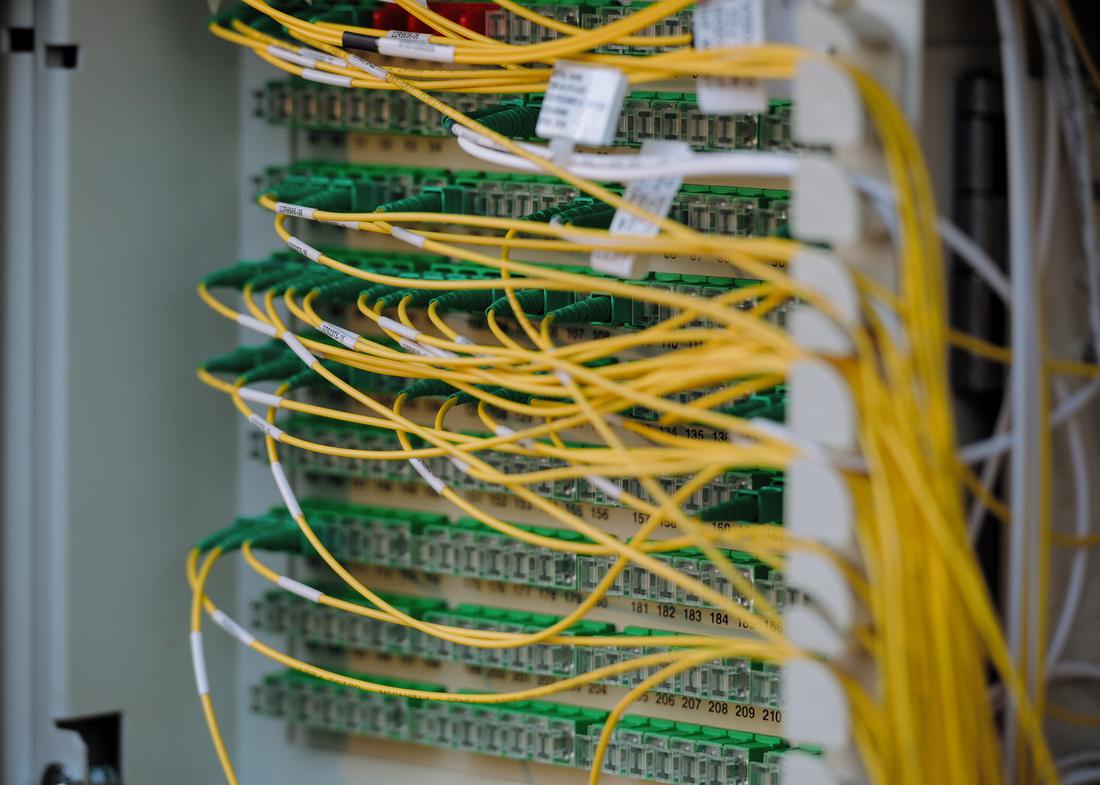
At the heart of every neural network is matrix multiplication—the mathematical operation that lets AI models recognize faces, translate languages, and predict market shifts. Traditionally, this process happens electronically, step by step. However, photonic circuits (chips that use light instead of electricity to move and process data) can perform vector-matrix multiplications as a single, near-instantaneous optical interaction. In simple terms, what takes thousands of electronic clock cycles can occur at the speed of light (literally).
What’s in it for you? Faster models, lower energy bills, and dramatically improved scalability. Training large language models (LLMs)—AI systems trained on massive datasets to generate human-like text—can consume megawatt-hours of power (MIT Technology Review, 2023). By accelerating core computations, photonic systems reduce both time and energy costs. That means quicker experimentation cycles, faster deployment, and more room for innovation instead of infrastructure bottlenecks.
Moreover, this speed unlocks new frontiers in photonic computing applications, especially when paired with neuromorphic computing—architectures inspired by the human brain’s neural structure. Photonic neural networks mimic biological pathways to deliver high-speed, low-power inference (real-time AI decision-making) at the edge. Think autonomous vehicles reacting in milliseconds or smart sensors filtering data before it even reaches the cloud (because latency is the enemy of safety).
Pro tip: Hardware acceleration only reaches its full potential when paired with simulation frameworks—much like those discussed in the role of digital twins in hardware development.
Ultimately, the benefit is clear: faster intelligence, lower costs, and AI systems that scale without melting the grid (and yes, that’s a real concern).
Future Horizons: Quantum Advancement and Advanced Sensing
Quantum computers sound like something Tony Stark would build in a cave, but their magic hinges on photonics—the science of generating and controlling light. Qubits (quantum bits, units that can exist in multiple states at once) are often manipulated and read using photons because light resists environmental noise better than electrons (a big deal when decoherence can crash a computation faster than a Windows 98 PC). In many architectures, photonic circuits act as the backbone enabling scalable photonic computing applications.
Photonic integrated circuits (PICs)—miniaturized optical systems etched onto chips—are shrinking devices once confined to labs:
- Optical Coherence Tomography (OCT) scanners now deliver micrometer-resolution imaging for earlier disease detection.
- LiDAR systems use laser pulses to map environments in real time, guiding autonomous vehicles like something out of Blade Runner.
Critics argue it’s overhyped, yet photons already enable quantum key distribution today worldwide.
Back in 2019, engineers warned that silicon transistors were nearing atomic limits. Today, the strain is visible across data centers, AI model training clusters, and quantum systems. These bottlenecks aren’t theoretical; they show up as soaring energy bills and heat ceilings (and nobody likes a melting server rack). The physical limits of silicon demand a new paradigm.
That’s where photonic computing applications step in:
- Optical interconnects move data at light speed with minimal resistance.
- Neuromorphic chips mimic neural pathways using photons instead of electrons.
Computing with light isn’t faster; it’s fundamentally more efficient, unlocking designs once deemed impossible.
The Next Leap in Computing Starts Now
You set out to understand where advanced computing is heading and how emerging hardware breakthroughs could reshape real-world performance. Now you’ve seen how light-based processing, next-gen architectures, and photonic computing applications are redefining speed, efficiency, and scalability across industries.
The real challenge isn’t just keeping up with innovation — it’s knowing which breakthroughs will actually matter for future devices and system design. As data demands surge and traditional silicon approaches hit physical limits, staying informed is no longer optional. It’s the difference between leading the next wave of innovation or struggling to catch up.
Here’s your next move: keep tracking emerging hardware trends, evaluate how these technologies fit into your current or future builds, and dive deeper into the evolving ecosystem shaping advanced computing. The teams that understand these shifts early are the ones that build faster, smarter, and more efficient systems.
Don’t wait for disruption to force your hand. Stay ahead of the curve, explore the technologies transforming device engineering, and position yourself to take advantage of what’s coming next.
 Joseph Keyseringer writes the kind of device optimization techniques content that people actually send to each other. Not because it's flashy or controversial, but because it's the sort of thing where you read it and immediately think of three people who need to see it. Joseph has a talent for identifying the questions that a lot of people have but haven't quite figured out how to articulate yet — and then answering them properly.
They covers a lot of ground: Device Optimization Techniques, FNTK Hardware Engineering Insights, Tech Innovation Updates, and plenty of adjacent territory that doesn't always get treated with the same seriousness. The consistency across all of it is a certain kind of respect for the reader. Joseph doesn't assume people are stupid, and they doesn't assume they know everything either. They writes for someone who is genuinely trying to figure something out — because that's usually who's actually reading. That assumption shapes everything from how they structures an explanation to how much background they includes before getting to the point.
Beyond the practical stuff, there's something in Joseph's writing that reflects a real investment in the subject — not performed enthusiasm, but the kind of sustained interest that produces insight over time. They has been paying attention to device optimization techniques long enough that they notices things a more casual observer would miss. That depth shows up in the work in ways that are hard to fake.
Joseph Keyseringer writes the kind of device optimization techniques content that people actually send to each other. Not because it's flashy or controversial, but because it's the sort of thing where you read it and immediately think of three people who need to see it. Joseph has a talent for identifying the questions that a lot of people have but haven't quite figured out how to articulate yet — and then answering them properly.
They covers a lot of ground: Device Optimization Techniques, FNTK Hardware Engineering Insights, Tech Innovation Updates, and plenty of adjacent territory that doesn't always get treated with the same seriousness. The consistency across all of it is a certain kind of respect for the reader. Joseph doesn't assume people are stupid, and they doesn't assume they know everything either. They writes for someone who is genuinely trying to figure something out — because that's usually who's actually reading. That assumption shapes everything from how they structures an explanation to how much background they includes before getting to the point.
Beyond the practical stuff, there's something in Joseph's writing that reflects a real investment in the subject — not performed enthusiasm, but the kind of sustained interest that produces insight over time. They has been paying attention to device optimization techniques long enough that they notices things a more casual observer would miss. That depth shows up in the work in ways that are hard to fake.