
If you’re exploring the future of autonomous adaptive hardware, you’re likely looking for more than surface-level speculation. You want to understand how next-generation devices can sense, learn, and respond to their environments in real time—and what that means for performance, usability, and system design.
This article breaks down how autonomous adaptive hardware is reshaping device engineering, from intelligent interfaces to self-optimizing components. We’ll examine the core technologies enabling adaptability, the engineering challenges teams must solve, and the real-world applications already pushing the boundaries of what hardware can do.
Our insights are grounded in ongoing analysis of emerging interface technologies, hardware prototypes, and current research developments across the tech landscape. By connecting concept innovation with practical engineering realities, this guide gives you a clear, informed view of where adaptive systems are headed—and how they’re transforming the devices of tomorrow.
Imagine a deep-sea drone descending into a trench no human has mapped. Instead of waiting for commands, it adjusts like a seasoned explorer, sensing currents and rewriting its own playbook mid-dive. Traditional machines, by contrast, act like stage actors stuck to a script—brilliant until something unexpected happens (and the ocean always has plot twists).
autonomous adaptive hardware changes that story. Think of it as a nervous system for machines:
- It perceives through embedded sensors
- It learns from real-time data
- It adapts its behavior instantly
Like a self-tuning guitar, it stays in harmony with chaos—transforming industries from healthcare to space exploration.
The Anatomy of an Autonomous System: Sense, Think, Act
Every autonomous system follows a simple loop: sense, think, act. However, the engineering behind that loop is anything but simple.
Sense (Perception)
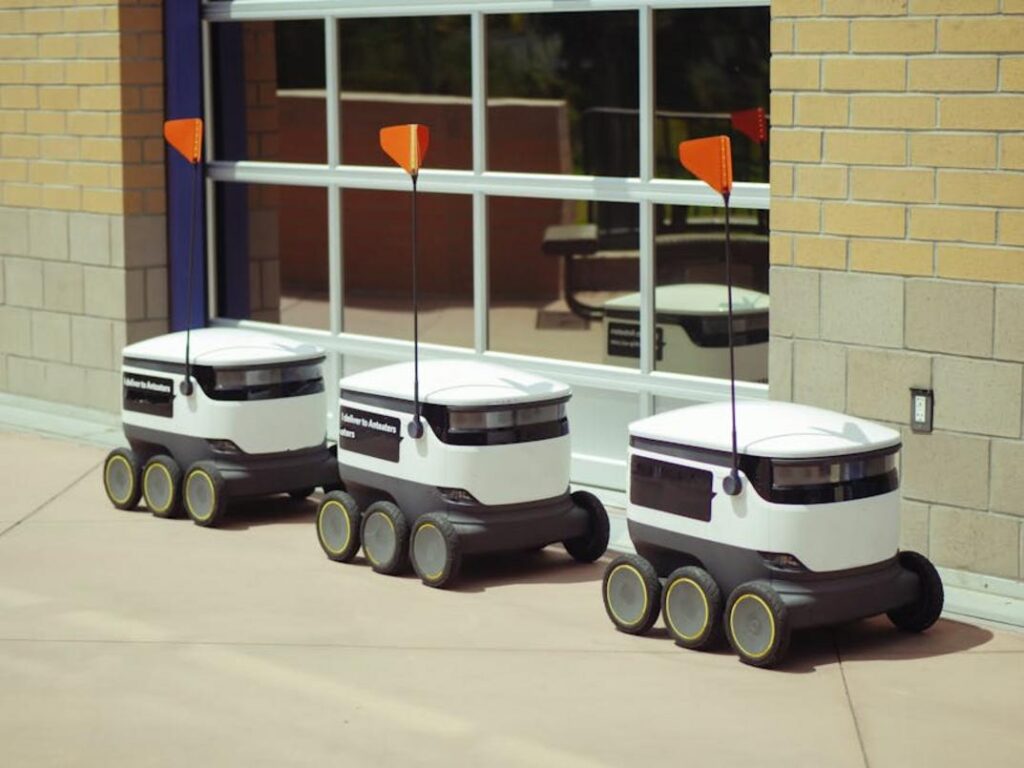
First, perception begins with sensor suites—LiDAR (Light Detection and Ranging, which measures distance using laser pulses), computer vision cameras, and proprioceptive sensors (devices that track internal position and movement). Together, they create multi-modal data, meaning information gathered from multiple sources at once. For example, a delivery robot might combine LiDAR depth maps with camera images to avoid a cyclist. Pro tip: when designing sensor stacks, overlap coverage areas by at least 15% to reduce blind spots (redundancy prevents small failures from becoming big ones).
Think (Cognition)
Next, edge computing processes data locally using AI System-on-Chips (SoCs) and NPUs (Neural Processing Units specialized for machine learning tasks). Instead of waiting on the cloud, the device reacts in milliseconds—critical for drones or surgical robots. In practice, test models under real latency constraints; simulations rarely capture environmental noise accurately.
Act (Action)
Finally, actuators—robotic arms, control surfaces, and power regulators—translate decisions into motion. Think of it like Iron Man’s suit (minus the dramatic soundtrack). In autonomous adaptive hardware, tight feedback loops ensure each action updates the next perception cycle.
From Programming to Learning: How Hardware Achieves Independence
At its simplest, automation follows a rigid script: if X happens, do Y. A motion sensor detects movement, the light turns on. Clean. Predictable. Limited. True autonomy, however, goes further: if unexpected Z occurs, analyze it, model a new response, and execute. That leap—from reaction to reasoning—is the core difference.
Think of a thermostat. Traditional models switch on when temperature drops below a threshold. An autonomous system studies usage patterns, weather forecasts, and occupancy behavior, then adjusts proactively (because nobody likes waking up to an icebox). It doesn’t just follow rules; it refines them.
This shift is powered largely by reinforcement learning—a machine learning method where systems improve through trial and error. In reinforcement learning, an agent takes actions in an environment and receives feedback signals called rewards or penalties. Over time, it optimizes decisions to maximize cumulative reward (Sutton & Barto, 2018). In other words, success teaches; failure instructs.
Consider a smart power grid component. During a sudden demand spike or equipment failure, traditional systems escalate alerts to human operators. But an intelligent node can autonomously reroute electricity in milliseconds, balancing load and preventing cascading outages. According to the U.S. Department of Energy, grid automation significantly reduces outage duration and improves reliability (energy.gov). Speed isn’t just convenient—it’s protective.
So what’s next? As autonomous adaptive hardware matures, expect devices that collaborate—sharing learned models across networks. The question won’t be whether machines can adapt, but how we design safeguards, transparency, and oversight to guide their independence responsibly.
- Key takeaway: Autonomy means systems that learn, not just execute.
Autonomous Technology in the Real World: Current Applications
In the Air and Space
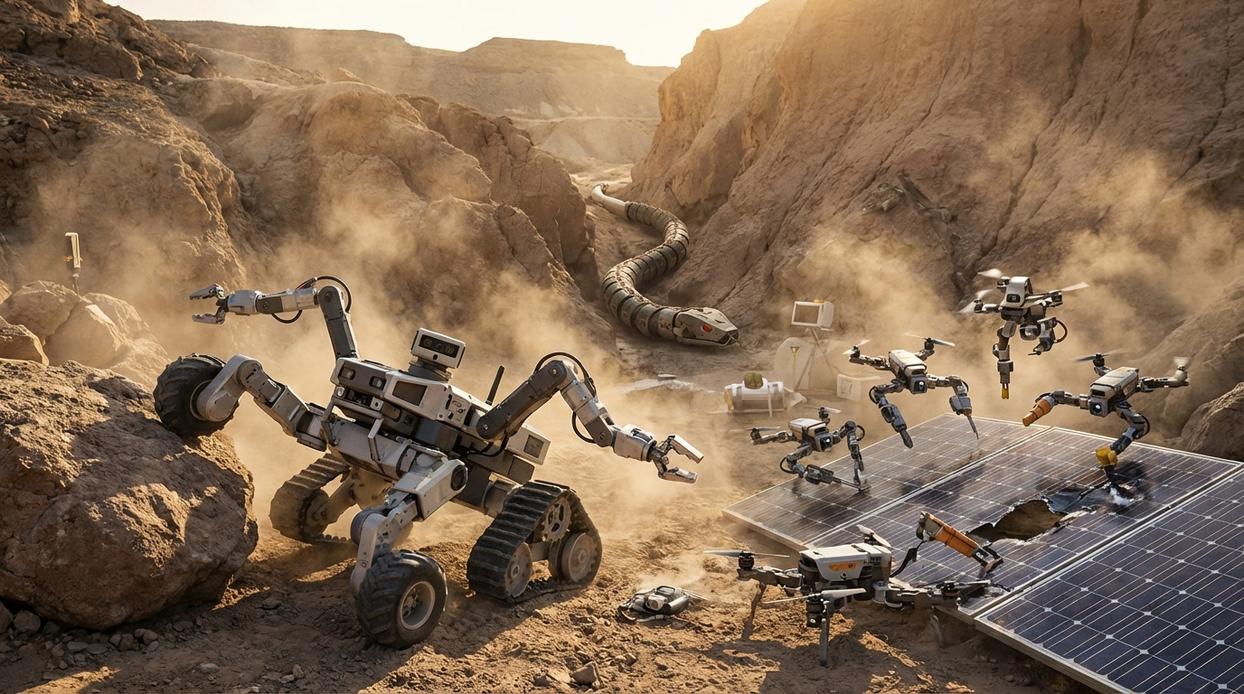
First, look up. Autonomous drones in agriculture don’t just follow GPS routes—they use real-time plant health analysis (often via multispectral imaging, meaning cameras that capture data beyond visible light) to adjust pesticide spray mid-flight. For example, John Deere’s See & Spray system reduces herbicide use by targeting only weeds, cutting chemical use by up to 66% (John Deere, 2023). That’s not sci‑fi—that’s cost savings.
Meanwhile, planetary rovers like NASA’s Perseverance use autonomous navigation to analyze terrain and choose safe paths without waiting for Earth-based commands (NASA JPL). The delay between Mars and Earth can exceed 20 minutes—too long for joystick driving.
Pro tip: When evaluating drone tech for farming or surveying, ask whether it processes data on-device or in the cloud. On-device AI reduces latency and connectivity risks.
On the Factory Floor
Next, consider collaborative robots—“cobots” (robots designed to safely work alongside humans). Unlike traditional industrial robots fenced off like Jurassic Park exhibits, cobots adjust speed and trajectory when humans approach. Companies such as Universal Robots report productivity gains of up to 85% in certain assembly tasks.
More advanced systems use autonomous adaptive hardware to self-optimize workflows. If a bottleneck forms, the system reallocates tasks in real time. However, critics argue automation displaces workers. In practice, most manufacturers redeploy staff to oversight and maintenance roles—higher-skill, higher-pay positions (World Economic Forum, 2020).
In Our Infrastructure
Finally, bridges and pipelines are becoming self-monitoring systems. Embedded sensors detect microfractures (tiny structural cracks) and, in some experimental systems, trigger self-healing materials or reroute flow automatically.
If you’re curious how these hardware breakthroughs scale computationally, explore exploring photonic computing and its real world applications.
Step-by-step, the pattern is clear: sense, decide, act—without waiting for us.
Engineering the Future: Hurdles and New Frontiers
The road to autonomous adaptive hardware isn’t blocked by imagination—it’s blocked by physics and risk. Power consumption remains the quiet bottleneck (battery chemistry hasn’t had its superhero moment yet). Cybersecurity is another hurdle: every connected sensor creates a new threat vector, meaning ZERO TRUST architectures are no longer optional (NIST, 2023). Validation is equally thorny; testing adaptive systems is like grading a student who changes answers mid-exam.
So what should you do? Prioritize:
- Low-power chipsets and edge processing
- Continuous penetration testing
Emerging interfaces—advanced haptics and neural links—will redefine supervision. Explore adaptive control pilots now, not later.
A World That Thinks for Itself
I remember standing on a factory floor watching a robotic arm pause, recalibrate, and reroute its task without anyone touching a controller. That moment crystallized the shift: we’re moving from machines we command to machines that problem-solve independently. The Sense Think Act model—where systems gather data, interpret it, then respond in real time—already powers smarter manufacturing, autonomous rovers, and deep-sea exploration. Critics argue autonomy risks unpredictability, but resilient design builds safeguards into every loop. With autonomous adaptive hardware, we edge toward systems that think for themselves, tackling complex, dynamic challenges with efficiency and grit.
The Future Demands Smarter Hardware
You came here to understand where next-generation devices are headed—and now you have a clearer view of how intelligent systems, real-time responsiveness, and autonomous adaptive hardware are reshaping the edge of innovation.
The real challenge isn’t awareness. It’s keeping up. Hardware cycles are shrinking, interface expectations are rising, and falling behind means missed opportunities, wasted R&D spend, and products that feel outdated before they launch.
The advantage belongs to those who track emerging architectures, experiment early, and design with adaptability in mind. Staying ahead of evolving interface technologies and system-level integration is no longer optional—it’s your competitive edge.
If you’re ready to future-proof your device strategy, start exploring the latest breakthroughs in adaptive systems and hardware intelligence now. Join thousands of engineers and tech leaders who rely on cutting-edge insights to guide their next build. Don’t let innovation outpace you—take the next step and stay ahead today.
 Hazel Brinkleyanday has opinions about advanced concepts. Informed ones, backed by real experience — but opinions nonetheless, and they doesn't try to disguise them as neutral observation. They thinks a lot of what gets written about Advanced Concepts, Tech Innovation Updates, FNTK Hardware Engineering Insights is either too cautious to be useful or too confident to be credible, and they's work tends to sit deliberately in the space between those two failure modes.
Reading Hazel's pieces, you get the sense of someone who has thought about this stuff seriously and arrived at actual conclusions — not just collected a range of perspectives and declined to pick one. That can be uncomfortable when they lands on something you disagree with. It's also why the writing is worth engaging with. Hazel isn't interested in telling people what they want to hear. They is interested in telling them what they actually thinks, with enough reasoning behind it that you can push back if you want to. That kind of intellectual honesty is rarer than it should be.
What Hazel is best at is the moment when a familiar topic reveals something unexpected — when the conventional wisdom turns out to be slightly off, or when a small shift in framing changes everything. They finds those moments consistently, which is why they's work tends to generate real discussion rather than just passive agreement.
Hazel Brinkleyanday has opinions about advanced concepts. Informed ones, backed by real experience — but opinions nonetheless, and they doesn't try to disguise them as neutral observation. They thinks a lot of what gets written about Advanced Concepts, Tech Innovation Updates, FNTK Hardware Engineering Insights is either too cautious to be useful or too confident to be credible, and they's work tends to sit deliberately in the space between those two failure modes.
Reading Hazel's pieces, you get the sense of someone who has thought about this stuff seriously and arrived at actual conclusions — not just collected a range of perspectives and declined to pick one. That can be uncomfortable when they lands on something you disagree with. It's also why the writing is worth engaging with. Hazel isn't interested in telling people what they want to hear. They is interested in telling them what they actually thinks, with enough reasoning behind it that you can push back if you want to. That kind of intellectual honesty is rarer than it should be.
What Hazel is best at is the moment when a familiar topic reveals something unexpected — when the conventional wisdom turns out to be slightly off, or when a small shift in framing changes everything. They finds those moments consistently, which is why they's work tends to generate real discussion rather than just passive agreement.