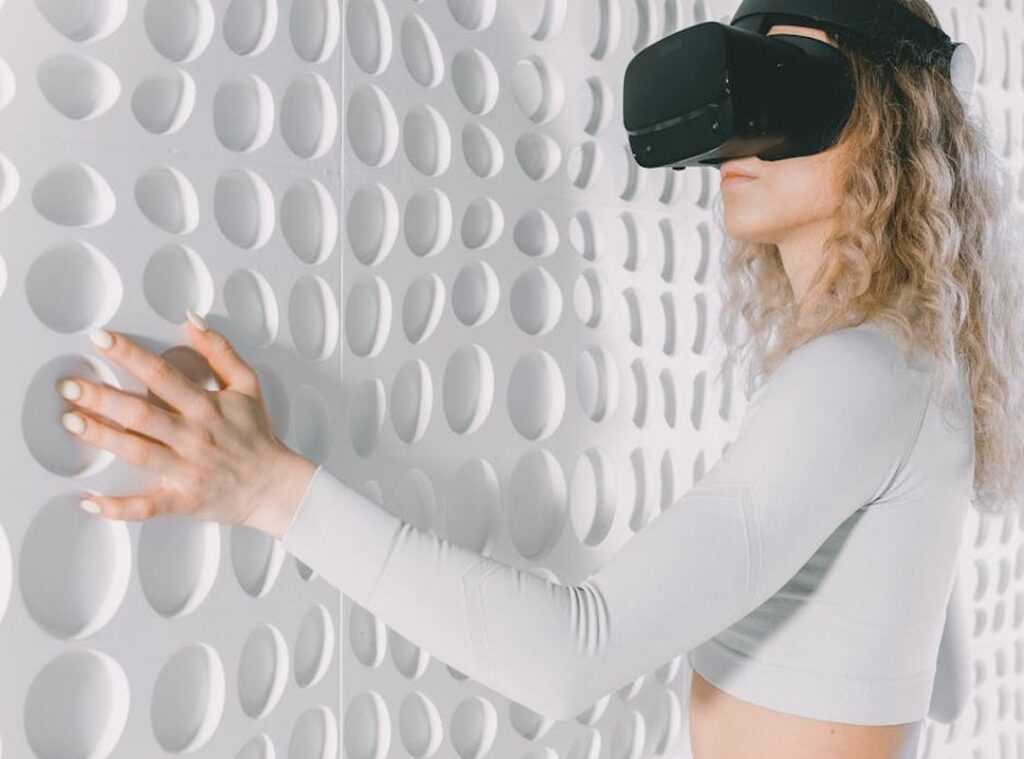

The era of flat, 2D screens is ending. AR interfaces digital are transforming how we interact with technology. But what does that mean? For many, the term conjures images of sci-fi fantasies or simple mobile games.
That’s misleading. I dug into hardware engineering and modern breakthroughs to this. We’ll strip away the confusion and dive into how these interfaces actually function.
Trust me, this is not theoretical fluff. It’s happening now. And it’s going to change everything.
By the end of this, you’ll understand how these interfaces work and their real-world impacts. Ready to see beyond the screen?
AR Interfaces: Beyond the Screen
An AR interface is the complete system of hardware and software that lets you see and interact with digital content overlaid onto your real-world view. This isn’t like your typical Graphical User Interface (GUI), which is stuck behind a screen. Imagine a GUI as a picture on the wall.
An AR interface turns the entire room into an interactive canvas. It’s spatial, contextual, and environmental (a) whole different beast.
Now, let’s clear up a common mix-up. AR and VR are not the same. VR replaces your world, creating a whole new digital universe.
AR, on the other hand, enhances what you already see. This difference is key because designing for AR means working with reality, not against it.
The main goal of an AR interface? To give you the right information at the right place and time, without blocking your view or frying your brain. You don’t want to be overwhelmed with digital clutter, right?
The idea is to blend the digital with your everyday life seamlessly.
Pro tip: Consider the user’s environment. An AR interface should complement, not complicate, your surroundings. Think of it as a tool that enriches your experience by providing meaningful interactions.
We’re on the brink of something big. The Rise Of Brain Computer Interfaces is pushing us into new dimensions of interaction. AR interfaces digital experiences are just the beginning.
We’re moving beyond screens into a world where digital and physical merge. It’s an exciting time. Are you ready to step into this new reality?
AR Interface Anatomy: The Hardware Heartbeat
Let’s break down AR into its core components, shall we? First up, display technology. It’s all about how we project images onto your eyes.
Ever heard of waveguides? They’re the magic behind HoloLens and Magic Leap. They guide light directly to your eyes, creating immersive visuals.
But then there’s ‘birdbath’ optics, a simpler method. Each has its trade-offs. Waveguides offer a wider field of view (FOV), but birdbath optics often have better transparency.
And let’s not forget about retinal projectors. They’re not mainstream yet, but imagine images beamed directly onto your retina. Crazy, right?
Now, onto the sensor suite. An AR device needs to understand its surroundings. Enter SLAM (Simultaneous Localization and Mapping).
It locks digital objects in place, making them appear real. Then there’s LiDAR and depth sensors. They map the environment in 3D, key for accurate placement.
IMUs track head movement, ensuring your view stays stable. Without these, you’d be lost in a digital fog.
Finally, the processing unit. This is where the magic gets real. Running all these systems in real-time is a massive computational challenge.
That’s why solid, low-power mobile processors are important. System on Chips (SoCs) dominate here. But as demands grow, dedicated AI and computer vision co-processors are stepping up.
They handle the workload efficiently, keeping battery usage in check. After all, who wants their AR experience cut short by a dead battery?
In this rapidly evolving field, understanding these components is key. AR interfaces digital revolution is just starting. Want more takeaways?
Check out how augmented reality interfaces transform modern shift …. It’s fascinating how these technologies blend to create smooth experiences. And as we embrace these innovations, the potential for change is limitless.
The Language of Interaction: Evolution or Revolution?
Ever wondered how our interactions with digital interfaces keep morphing? Let me break it down for you. Right now, we’re mostly using two main methods: hand tracking and voice commands.

Hand tracking uses cameras to recognize gestures like the classic “pinch-to-click.” It’s intuitive, sure, but there’s the downside of arm fatigue and looking a bit awkward in public. And voice commands? They’re great, until you realize ambient noise can throw off your Alexa or Siri.
But enough about today’s tools. Let’s talk next-gen. Eye-tracking technology is stepping up the game.
Imagine a system that knows your intent by simply tracking where you look. Selection becomes faster and almost telepathic. Pretty neat, right?
And then there are EMG wristbands. These devices interpret nerve signals in your arm, letting you control gestures with subtle, almost invisible movements. It’s like magic, only more scientific.
Now, you might ask, what’s missing from all this wizardry? Feedback. This is where haptics enter the scene.
It’s not just about seeing and hearing anymore. Haptic technology. Like ultrasonic arrays or gloves (lets) you feel digital objects.
This feedback makes interactions more real, bridging the gap between the digital and physical worlds. Without it, interfaces feel flat and, well, fake.
So, where do AR interfaces digital stand in all this? They’re at the crossroads, incorporating these advanced inputs for richer experiences. And if you think gesture controls are just a gimmick, think again.
They’re shaping the future of user interaction. Curious to dive deeper? Check out this Gesture Control Revolutionizing User Interaction page for more takeaways.
Here’s a pro tip: Keep an eye on how these technologies blend. The smooth integration of inputs and feedback is the frontier. It’s not just evolution.
It’s a revolution.
AR Here and Now: Tackling Real-World Challenges
Let’s cut through the noise. AR isn’t just about flashy gaming. It’s about real applications making a difference.
Picture a surgeon. They don’t have time to fumble with screens, right? So they use AR to view a 3D model of a patient’s organ directly overlaid during surgery.
This isn’t some sci-fi fantasy. It’s happening now.
Then there are aerospace engineers. AR helps them access interactive, step-by-step assembly instructions. Imagine the time saved when specific parts on a complex engine are highlighted right in front of them.
It’s a game-changer.
And first responders? They need to see a building’s layout through smoke. AR interfaces digital aids let them do that.
They can also track colleague locations, making chaotic environments more navigable.
But let’s talk about the hurdles. The first one? Form factor and social acceptance.
Nobody wants to wear a clunky headset. We’re talking about making these devices lightweight and normal-looking.
Next, battery life versus performance. It’s the epic battle: all-day power without compromising performance. The last big hurdle is contextual awareness.
Designing AI that knows what’s helpful versus distracting is key. Without this, AR will just be another tech gimmick. Solving these hurdles pushes AR beyond gimmicks into daily necessity.
A Clear Vision for Tomorrow
You’ve seen it now: AR interfaces digital aren’t just science fiction. We’ve moved from imagining to engineering. The challenge?
Getting those computations out of your pocket, into your line of sight. It’s not magic. It’s advanced displays, sensors, and intuitive interactions making it happen.
So, what’s next for you? Keep your eyes on the horizon. Hardware breakthroughs will shape the next level of computing.
Want to be ahead of the curve? Start focusing on these innovations. Don’t just watch the future unfold, be part of it.
Dive into the evolution today. Stay informed, stay relevant. It’s your move.
 Hazel Brinkleyanday has opinions about advanced concepts. Informed ones, backed by real experience — but opinions nonetheless, and they doesn't try to disguise them as neutral observation. They thinks a lot of what gets written about Advanced Concepts, Tech Innovation Updates, FNTK Hardware Engineering Insights is either too cautious to be useful or too confident to be credible, and they's work tends to sit deliberately in the space between those two failure modes.
Reading Hazel's pieces, you get the sense of someone who has thought about this stuff seriously and arrived at actual conclusions — not just collected a range of perspectives and declined to pick one. That can be uncomfortable when they lands on something you disagree with. It's also why the writing is worth engaging with. Hazel isn't interested in telling people what they want to hear. They is interested in telling them what they actually thinks, with enough reasoning behind it that you can push back if you want to. That kind of intellectual honesty is rarer than it should be.
What Hazel is best at is the moment when a familiar topic reveals something unexpected — when the conventional wisdom turns out to be slightly off, or when a small shift in framing changes everything. They finds those moments consistently, which is why they's work tends to generate real discussion rather than just passive agreement.
Hazel Brinkleyanday has opinions about advanced concepts. Informed ones, backed by real experience — but opinions nonetheless, and they doesn't try to disguise them as neutral observation. They thinks a lot of what gets written about Advanced Concepts, Tech Innovation Updates, FNTK Hardware Engineering Insights is either too cautious to be useful or too confident to be credible, and they's work tends to sit deliberately in the space between those two failure modes.
Reading Hazel's pieces, you get the sense of someone who has thought about this stuff seriously and arrived at actual conclusions — not just collected a range of perspectives and declined to pick one. That can be uncomfortable when they lands on something you disagree with. It's also why the writing is worth engaging with. Hazel isn't interested in telling people what they want to hear. They is interested in telling them what they actually thinks, with enough reasoning behind it that you can push back if you want to. That kind of intellectual honesty is rarer than it should be.
What Hazel is best at is the moment when a familiar topic reveals something unexpected — when the conventional wisdom turns out to be slightly off, or when a small shift in framing changes everything. They finds those moments consistently, which is why they's work tends to generate real discussion rather than just passive agreement.