
As interest in decentralized automation accelerates, many readers are searching for a clear, practical understanding of how swarm robotics systems are evolving—and what they mean for the future of hardware and intelligent devices. This article addresses that need directly, breaking down how coordinated multi‑agent robotics works, where the technology stands today, and which engineering breakthroughs are pushing it forward.
We explore the core mechanics behind swarm behavior, the interface technologies enabling real‑time coordination, and the hardware constraints shaping real‑world deployment. Whether you’re a developer, researcher, or tech enthusiast, you’ll gain a grounded view of current capabilities and near‑term applications.
Our analysis draws on up‑to‑date research, prototype developments, and insights from ongoing advancements in robotics engineering and distributed systems. By the end, you’ll understand not just the concept, but the practical trajectory of swarm-based robotics—and why it’s becoming a defining force in next‑generation device innovation.
Beyond the Single Machine
We’re entering a new era of collective robotics where many simple units outperform one complex giant. Critics argue centralized robots are easier to control and secure—and they’re not wrong (debugging one brain beats herding hundreds). But distributed models excel through emergent behavior—complex outcomes from simple rules—like ants forming bridges or birds flocking.
| Single Robot | Collective Robots |
|————–|——————|
| High cost | Scalable units |
| Single failure point | Fault tolerant |
swarm robotics systems tackle disasters, agriculture, and space exploration—problems too vast for monolithic machines. Hardware coordination remains challenging today.
How Swarms Think: The Principles of Decentralized Intelligence
If you’ve ever watched a flock of birds twist across the sky like a living cloud, you’ve seen decentralized intelligence in action (no air traffic controller required). At its core is decentralized control: no single leader, no master server, no hive-queen issuing commands. Each unit follows a small set of shared rules based only on what it senses nearby. This eliminates a single point of failure—meaning if one unit goes down, the system doesn’t collapse.
Critics argue that without central oversight, chaos is inevitable. After all, isn’t coordination easier with a boss? Sometimes, yes. But centralized systems can bottleneck or fail catastrophically. Swarms trade strict control for resilience.
Local Communication & Sensing
Instead of checking in with headquarters, units rely on local signals like:
- Infrared pulses
- Radio frequency signals
- Physical contact sensors
This neighbor-to-neighbor communication is what makes swarm robotics systems scalable. Add more units, and the system grows organically—no redesign needed.
Emergent Behavior Explained
Here’s where it gets fascinating. Imagine three simple rules:
- Avoid collisions
- Match your neighbor’s speed
- Move toward the group’s center
Individually, these rules seem basic. Together, they produce coordinated flocking that looks choreographed—like something out of Black Mirror, minus the dystopia.
Scalability and Robustness
The advantages are clear:
- Robustness: Losing a few units barely affects the mission.
- Scalability: More units equal more capability.
Pro tip: The simpler the rules, the more reliable the emergence. Complexity, ironically, often starts small.
Swarms at Work: Four Industries Being Transformed Today
Swarms aren’t science fiction anymore (sorry, Marvel fans). They’re practical, deployable, and quietly reshaping entire industries.
Logistics and Automation
In modern warehouses, fleets of autonomous mobile robots (AMRs) glide across floors, dynamically rerouting around obstacles and optimizing pick paths in real time. Unlike fixed conveyor belts—which require costly redesigns when layouts change—robotic swarms adapt through software updates. Amazon reports that robotics has improved fulfillment efficiency and reduced operational costs in many facilities (Amazon, 2023). Critics argue traditional systems are more predictable and easier to maintain. That’s fair. But flexibility is now the competitive edge. When demand spikes overnight, software-defined coordination wins.
Environmental Monitoring
Scale changes everything. A single drone can collect data. Hundreds can map ocean temperatures, track oil spills, or monitor wildfire perimeters simultaneously. NOAA has highlighted the growing role of autonomous systems in climate and ocean research (NOAA, 2022). Some skeptics worry about airspace congestion or data overload. Yet distributed sensing—where many small units gather localized data—often produces richer, real-time insights than one expensive aircraft. Think less “one hero helicopter,” more “team effort.”
Precision Agriculture
Farmers are deploying swarm robotics systems for targeted pollination, pest detection, and micro-dosing water or nutrients. The FAO notes precision agriculture can significantly reduce chemical use while improving yields (FAO, 2021). Opponents say small robots can’t match the throughput of heavy machinery. True—individually. But collectively, they minimize soil compaction and treat crops plant by plant (which your strawberries will appreciate).
Search and Rescue Operations
In disasters, speed saves lives. Swarms of small, expendable robots can enter collapsed buildings, map voids, and detect heat signatures before humans step inside. Some argue reliability is a concern in chaotic environments. Yet redundancy—many units instead of one—means failure of a few doesn’t doom the mission.
For a deeper look at where this is headed, explore the future of autonomous systems and adaptive hardware.
The Next Frontier: Overcoming the Hardware Engineering Hurdles
The Power Problem
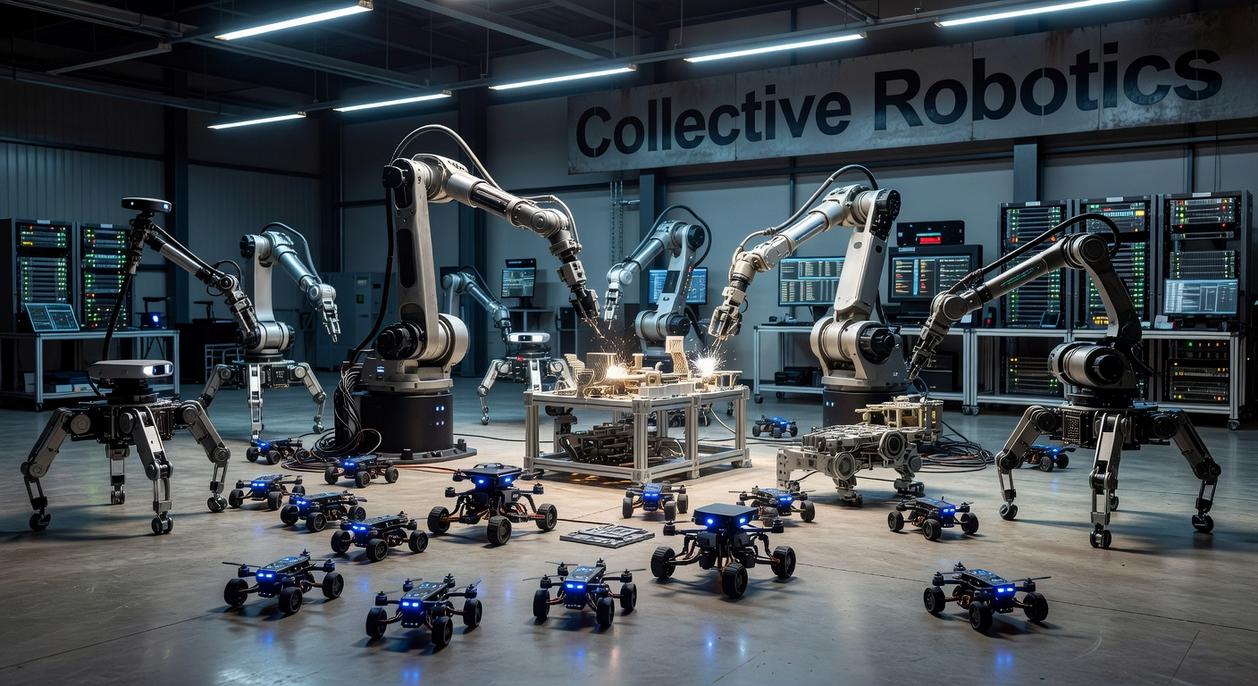
Energy density—the amount of energy stored per unit weight—remains the gating factor for miniaturized robots. Lithium-ion batteries average 250–300 Wh/kg (U.S. Department of Energy), which limits mission duration when every gram counts. For long-duration autonomy, engineers are exploring solid-state batteries (projected to exceed 400 Wh/kg, according to Toyota research updates) and wireless charging grids embedded in infrastructure. Energy harvesting—capturing ambient power from light, vibration, or RF signals—adds incremental gains (MIT demonstrated sub-milliwatt harvesting for micro-devices). Pro tip: optimizing power management firmware often extends runtime more than upgrading the battery itself.
Sensing and Actuation at Scale
In swarm robotics systems, scaling from 10 to 10,000 units magnifies cost and failure rates exponentially. A 1% actuator defect rate means 100 failures per deployment. Research from IEEE reliability studies shows component failure probability compounds in distributed systems. Engineers must balance:
- Ultra-low-cost MEMS sensors
- Redundant actuation pathways
- Statistical quality control at volume
Robust Communication Modules
Underwater RF signals attenuate within meters (NOAA data), while steel structures block 2.4 GHz signals entirely. Solutions include acoustic modems, mesh networking, and ultra-wideband systems tested in DARPA field trials.
Manufacturing and Deployment
Mass deployment demands automation. Case studies from automated drone assembly lines show 30–40% efficiency gains via robotic calibration. Emerging concepts like self-assembly and autonomous docking reduce human intervention (think modular bots snapping together like high-tech LEGO—but with firmware). Scale isn’t just engineering—it’s logistics.
The Future is Collective: What’s Next for Distributed Systems
At its core, the promise of swarm robotics systems is simple: intelligence emerges from cooperation, not complexity. Instead of building one ultra-advanced (and ultra-expensive) machine, engineers deploy hundreds or thousands of simpler units that coordinate through local rules. This principle—called distributed intelligence, meaning decision-making shared across many agents—has already been validated. For example, Harvard’s Kilobot project demonstrated over 1,000 small robots forming coordinated shapes, while NASA has tested swarm concepts for autonomous space mapping (NASA JPL, 2023).
As a result, these collectives are proving more robust and scalable than centralized systems. If one unit fails, the system adapts—much like ant colonies rerouting around obstacles (nature solved this first).
Looking ahead, researchers are exploring bio-hybrid swarms that integrate living cells, self-assembling materials constructed by micro-robots, and coordinated probes for asteroid exploration. With hardware costs dropping and processing power rising (Moore’s Law trends, IEEE), distributed systems are steadily moving from labs into real-world infrastructure.
The Future of Coordinated Machine Intelligence
You set out to understand how coordinated automation is evolving—and now you can clearly see how distributed intelligence, adaptive coordination, and swarm robotics systems are reshaping modern engineering. From manufacturing floors to disaster response zones, these technologies are solving the very pain point that slows innovation: rigid, single-point systems that fail under pressure.
The real advantage of swarm-based design is resilience. When one unit fails, the system adapts. When conditions change, the network responds. That flexibility is exactly what forward-thinking engineers and tech leaders need in a world that demands speed, scalability, and fault tolerance.
If you’re exploring next-generation automation or designing intelligent hardware, now is the time to go deeper. Don’t let outdated architectures limit your potential.
Stay ahead of emerging robotics breakthroughs, explore advanced interface innovations, and tap into proven engineering insights trusted by thousands of tech professionals. Start integrating smarter, more adaptive systems today.