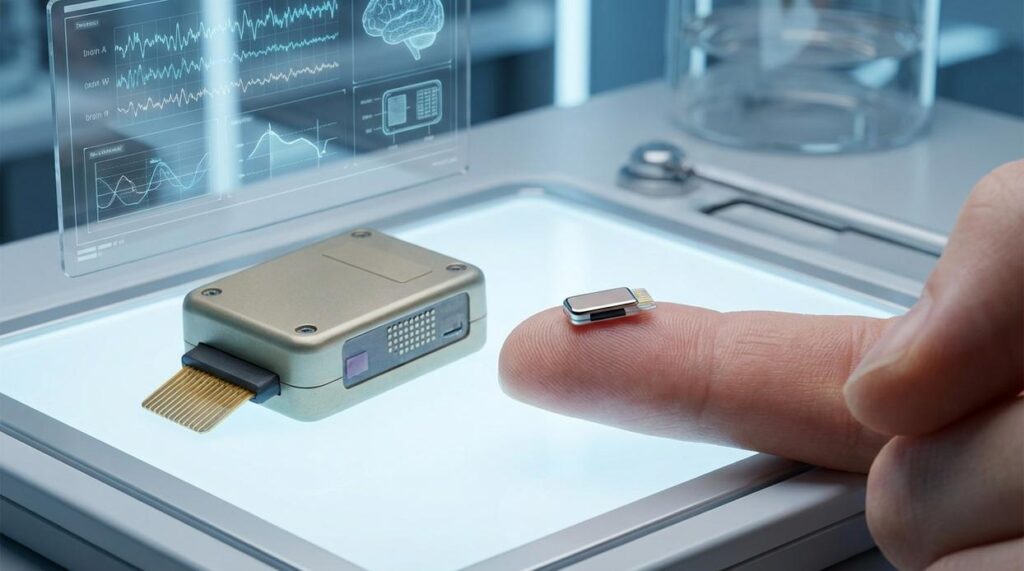
The race to merge mind and machine is accelerating—and if you’re searching for a clear, grounded explanation of brain-computer interfaces evolution, you’re likely looking for more than hype. You want to understand how we moved from bulky lab experiments to minimally invasive neural implants, AI-assisted signal decoding, and real-time device control—and what that progression actually means for healthcare, communication, and human augmentation.
This article breaks down the technological milestones that shaped modern brain-computer interfaces, from early EEG-based systems to next-generation neural implants and adaptive machine learning models. We’ll examine the engineering challenges, interface breakthroughs, and material science innovations driving today’s momentum.
To ensure accuracy, this analysis draws on peer-reviewed neuroscience research, hardware engineering principles, and insights from leading developments in neural signal processing. By the end, you’ll have a clear, technically grounded understanding of where the technology stands today—and where it’s realistically headed next.
The Next Leap in Human-Computer Interaction
Keyboards click. Screens glow. Yet thought moves faster. Human cognition operates in milliseconds, while typing a sentence can take minutes.
Back in 2019, most labs were still proving basic signal detection. By 2024, after years of miniaturization and safer neural probes, prototypes began translating intent into cursor movement within weeks of calibration.
The real bottleneck is intent-to-execution delay—the lag between deciding and doing.
Here’s what’s changing:
| Layer | Breakthrough |
| — | — |
| Hardware | Flexible electrodes |
| Software | Adaptive AI decoding |
Understanding brain-computer interfaces evolution means grasping these tangible engineering shifts happening now. Today, productivity waits for hardware. And software.
From Noisy Signals to Clear Intent: The Breakthrough in Neural Decoding
The core challenge in brain–computer interface research is simple to describe and brutally hard to solve: isolating intentional neural commands from the brain’s constant electrical chatter (think of trying to hear a whisper at a rock concert). In technical terms, that’s a signal-to-noise problem—where “signal” means meaningful patterns tied to intention and “noise” refers to background activity unrelated to the task (Nature, 2021).
Meanwhile, hardware has transformed the playing field. Early non-invasive EEG caps captured broad cortical rhythms, but high-density microelectrode arrays now sit closer to neurons, dramatically improving signal fidelity—accuracy and clarity of recorded data. That shift in brain-computer interfaces evolution means cleaner inputs before software even begins.
However, raw clarity isn’t enough. Advanced machine learning models—algorithms that learn patterns from data—act as AI co-processors, filtering streams in real time, recognizing intent, and translating spikes into precise digital commands (IEEE, 2023). As accuracy rises, so do practical applications: smoother robotic limb control, faster communication for paralyzed patients, and reliable cursor movement.
So what’s next? Expect adaptive implants that personalize decoding over time and cloud-linked training loops that continuously refine performance (yes, firmware updates for brains).
The Miniaturization Revolution: How BCI Hardware is Evolving
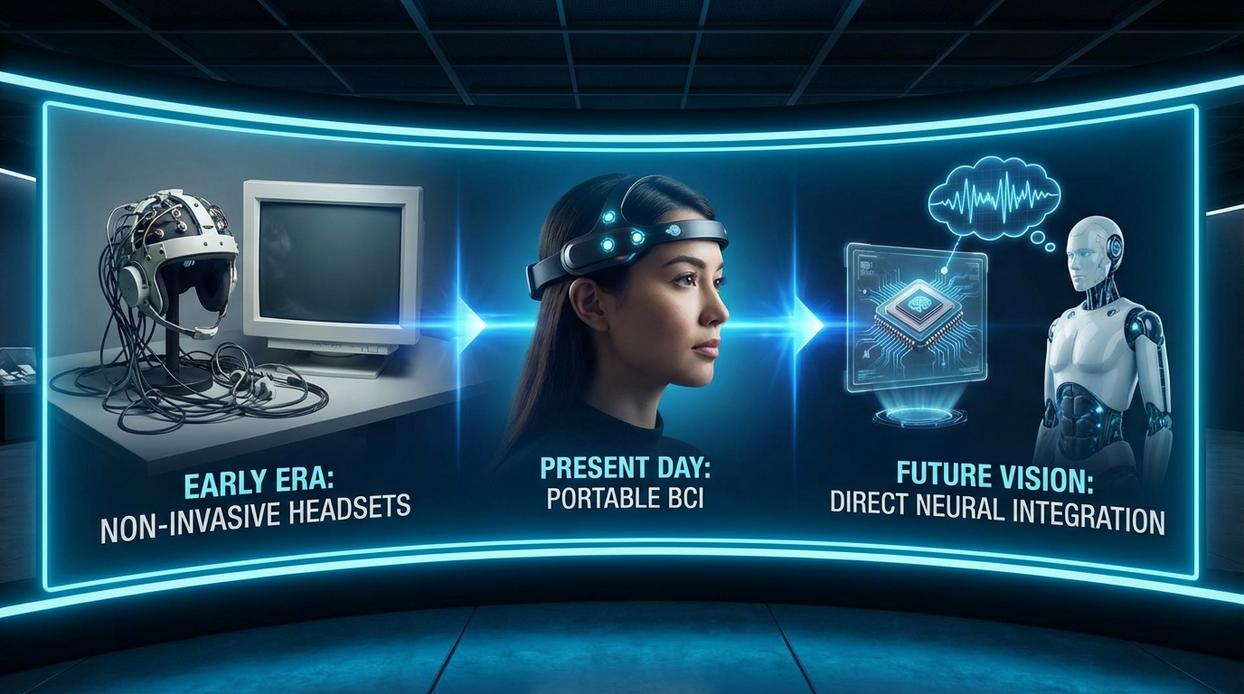
Not long ago, brain-computer interfaces (BCIs) looked like something ripped from a 90s sci-fi set—bulky headgear, tangled wires, and lab-only usability (very “The Matrix,” minus the cool leather coats). Today, we’re witnessing a dramatic shift toward fully implantable, wireless systems designed for real-world use.
The story of brain-computer interfaces evolution is, in my view, a story of engineering humility. Early systems prioritized signal clarity over comfort. Now, the goal is seamless integration. Fully implantable BCIs eliminate percutaneous wires—those cables that pass through the skin—reducing infection risk and enabling mobility beyond controlled lab environments.
Biocompatibility and Longevity
Biocompatibility—a material’s ability to function without triggering immune rejection—has become central. Flexible polymers and ultra-thin electrode arrays now move with brain tissue rather than against it. This reduces inflammation and signal degradation over time. Some researchers are exploring bioresorbable coatings that dissolve safely after implantation (a clever workaround to long-term irritation).
I believe this materials shift is the real breakthrough. Without longevity, even the smartest device becomes medical clutter.
Power and Data Management
Miniaturization creates new headaches:
- Wireless power transfer via inductive coupling
- On-chip data compression to handle massive neural signal streams
- Encrypted transmission protocols for security
Transmitting high-bandwidth neural data securely is no small feat. Neural signals generate enormous datasets, and efficient compression is essential to prevent overheating and battery drain.
As hardware shrinks, device concepts grow bolder—sleeker implants for paralysis treatment, cognitive monitoring wearables, even consumer-focused neurotech. I’m cautiously optimistic. Smaller doesn’t just mean subtler. It means scalable.
Beyond Restoration: New Frontiers for Brain-Computer Interfaces
Brain-computer interfaces (BCIs) first proved their value by restoring communication and movement to people with paralysis. Yet that milestone is only the opening chapter. The real story lies in how brain-computer interfaces evolution is shifting from therapy to augmentation.
For example, recent AR and VR prototypes allow users to select menus or move digital objects through focused neural signals, bypassing controllers entirely. Meanwhile, high-speed control systems are being tested for complex design software and drone navigation. Instead of clicking icons, users think commands.
What competitors often overlook is the infrastructure challenge: signal fidelity, latency reduction, and adaptive AI layers that interpret noisy brain data in milliseconds. Those engineering gains, not flashy demos, create defensible advantages.
Emerging interface technologies push even further:
- Silent communication, where subvocal neural patterns transmit text without spoken words.
- Closed-loop feedback that stimulates precise brain regions to accelerate language or motor learning.
- Hybrid wearables combining eye tracking, EMG, and neural input for seamless control.
Public demonstrations already hint at this trajectory. In 2023 and 2024, multiple startups showcased noninvasive headsets capable of translating EEG signals into real-time cursor movement and basic synthesis. Compared with earlier medical-only systems, these devices prioritize portability, cloud connectivity, and developer APIs.
And when paired with insights from gesture control systems redefining human device interaction, the competitive edge becomes clear: multimodal control will outpace single-channel design. The frontier is not replacement, but expansion of how humans think, learn, and create with machines. The shift accelerates.
The Hurdles Ahead
I still remember the first time I saw a live neural feed spike across a monitor—data flooding in faster than the system could clean it (like trying to sip from a firehose). The data bottleneck—the limit on processing massive real-time brain signals without lag—isn’t theoretical; it’s painfully practical. In the race of brain-computer interfaces evolution, milliseconds matter.
Then there’s ethics. Who owns your neural data? Could someone hack a thought? Neural privacy must be treated like bodily autonomy. Critics argue enhancement tech widens inequality. Maybe. But hard problems aren’t stop signs—they’re engineering invitations.
The latest breakthroughs in brain-computer interfaces evolution signal a turning point. Superior signal decoding algorithms now translate neural activity with startling precision, while miniaturized, wireless hardware makes once-bulky systems wearable and scalable. Meanwhile, applications are expanding beyond clinical trials into gaming, prosthetics, and productivity tools.
For readers, the takeaway is clear:
- Monitor validated clinical data before adopting devices.
- Prioritize secure, updatable hardware ecosystems.
- Experiment with developer kits to understand real-world limits.
Skeptics argue the barrier between thought and action will never disappear. Yet each iteration systematically dismantles that divide. Imagine controlling devices at the speed of intention. Ready? Today.
The Future of Human–Machine Connection Starts Now
You came here to understand where interface technology is heading and how emerging systems are reshaping the way humans interact with machines. Now you have a clearer picture of the rapid brain-computer interfaces evolution, the breakthroughs in hardware engineering, and the device concepts pushing boundaries.
The reality is this: technology is moving faster than ever, and falling behind means missing the next wave of opportunity. Whether you’re a developer, investor, or tech enthusiast, staying informed isn’t optional—it’s essential.
Here’s what to do next: stay ahead of the curve by tracking emerging interface technologies and device innovations as they happen. Join thousands of forward-thinking innovators who rely on our insights to cut through the noise and spot what matters first.
Don’t wait for the future to arrive—understand it, prepare for it, and build for it today.