
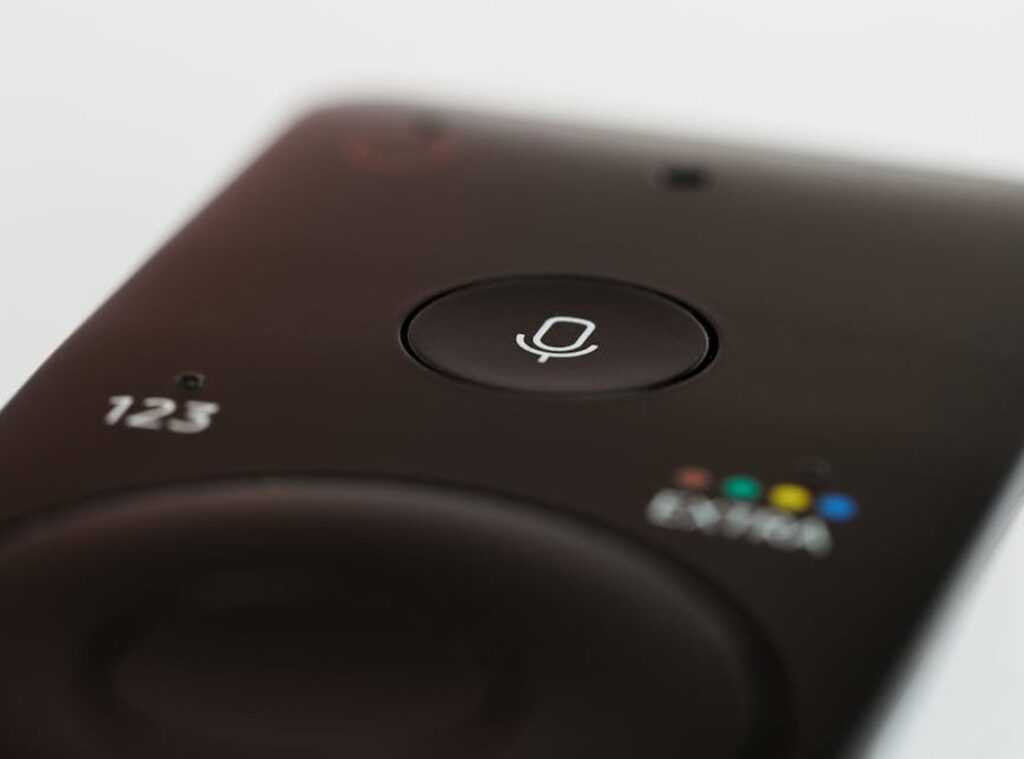
Ever asked your smart speaker for the weather or told your car to take you home? It’s become so normal, hasn’t it? But here’s the kicker: How does the device actually understand you?
This tech isn’t just about convenience. It’s about a shift in our relationship with machines.
I’m diving into the voice user interface. Not just the surface stuff, like how it answers your questions, but what powers it and where it’s headed next. This isn’t a casual glance.
It’s a deep dive, grounded in the latest tech developments and takeaways.
You can trust this because it’s based on thorough analysis of emerging interface technologies. Get ready for a clear, futuristic guide to what’s beyond the usual smart assistants. This is the future of interaction.
And it’s listening.
Cracking the Code: Voice User Interface Magic
A Voice User Interface (VUI) is, at its core, a method that allows humans to interact with computers using speech. It’s the tech that lets our gadgets understand and respond in a somewhat human way. Now, let’s talk tech: ASR, NLU, and TTS.
These are the three pillars that make this magic happen. Think of ASR (Automatic Speech Recognition) as the ears. It listens to what you’re saying.
NLU (Natural Language Understanding), the brain, figures out what you mean. Then, TTS (Text-to-Speech), the mouth, responds in a way that sounds natural.
Consider this: beyond Alexa and Siri, VUIs are everywhere. They’re in interactive voice response systems you encounter when you call customer service, in-car controls that keep drivers focused on the road, and even in voice-activated surgical equipment. Surprised?
You shouldn’t be. It’s all about how seamlessly these components work together to create a conversation that’s almost like chatting with a human.
And here’s the kicker: as we integrate technology more into our daily lives, haptic feedback future touch interfaces are making waves alongside voice tech. It’s the interface interplay that’s truly fascinating. How these elements come together to give us a smooth experience is the real genius here.
We’re standing on the brink of a future where talking to machines might be as natural as a conversation with a friend. Have you ever thought about that?
From Sci-Fi to Smart Watches: Voice Takes Over
Remember HAL 9000 from “2001: A Space Odyssey”? That creepy calm voice set the stage for conversational AI in pop culture. Star Trek also teased us with its computer you could just talk to.
But could it ever be real?
Fast forward to the mid-20th century, and we see Bell Labs’ “Audrey.” It was the first real-world voice tech attempt. Yet it only recognized digits and a single voice. Imagine the frustration!
But it was a start for the voice user interface as we know it.
By the 90s, we had early dictation software. I tried it. Did it work?
Sort of. Continuous speech and accents were a nightmare for these systems. They were clunky, slow, and frankly, limited.
Yet they paved the way for more.
The real leap came with cloud computing and machine learning. Enter Siri in 2011. Suddenly, voice assistants became part of our life.
They were smarter, faster, and more intuitive. The explosion of smart speakers and integrated assistants was inevitable. Now, they’re in our pockets, our homes, even our cars.
And it keeps evolving. We now expect our devices to understand and respond to us. Curious about how it all fits in today?
Check out this breakdown for more takeaways.
So, what’s next? Maybe our smart watches will start having full-on conversations with us. Or maybe they’ll read our minds (yikes).
Either way, voice tech isn’t just a novelty anymore. It’s shaping how we interact with the world. Isn’t that wild?
From Wake Word to Reality: Your Command’s Journey
Ever wondered how “Hey Google” turns into action? It almost feels like magic, but it’s pure tech wizardry. When you utter that wake word, a low-power processor on your device perks up.

It’s like having a tiny sentinel always on duty, waiting for that acoustic pattern. And no, it’s not recording your every word (thankfully) (just) filtering out noise until it hears that familiar cue.
So, you’ve triggered the system. Now what? Your voice gets snatched up by the microphone array.
It’s like a catcher’s mitt for sound, digitizing your voice and packaging it for the cloud (or,) sometimes, just sending it to an on-device processor. It’s as if your words are transformed into a secure data stream, ready for analysis.
In the cloud, the real magic unfolds. Massive neural networks get to work, breaking your voice into phonemes (tiny chunks of sound). These systems are pretty much the brains of the operation, using Natural Language Understanding (NLU) to figure out what you actually want.
Imagine little digital elves querying databases to pull the info you need.
Then comes crafting the response, a key step where the system generates a text reply. But we don’t stop at text. The Text-to-Speech (TTS) engine kicks in, converting this response into natural-sounding speech.
Why does it seem so effortless? Hardware, my friend. Advanced microphones with noise cancellation make the process smooth (almost like magic).
It’s as if the machine’s suddenly fluent in human.
These small details matter more than you’d think. They’re the backbone of the whole experience.
And if you’re intrigued by how tech bridges gaps, check out ar interfaces bridging physical digital. It’s fascinating!
The voice user interface isn’t just about cool tech; it’s foundational. It makes tech feel less like tech and more like a helpful friend. So next time you say “Hey Google,” remember the journey your voice takes.
It’s remarkable, really.
The Next Frontier: Ambient and Emotional Voice Interfaces
Imagine a world where the voice user interface isn’t just a voice assistant glued to your phone or smart speaker. The future is ambient computing. We’re talking about voice interfaces seamlessly woven into everything around us.
Your walls. Your car. Even your glasses.
It’s all about integration. Not sci-fi anymore, right?
Now, what’s the big deal with proactive assistance? Well, picture your AI knowing you need a coffee refill before you even think it. That’s the next step.
We’re moving from machines reacting to commands to systems anticipating needs. The goal? Make life smoother without you lifting a finger.
A little unsettling? Maybe. But undeniably cool.
Let’s dig into emotional AI. It’s not just about recognizing words, but picking up on your tone and emotion. The dream is for AI to respond in a way that feels more human (like) it actually gets you.
Imagine the possibilities. It could transform how we interact with technology and maybe even improve our mood.
Here’s the kicker: hardware is catching up too. Ultra-fast on-device AI chips are revolutionizing this space. Faster responses and better privacy mean this tech isn’t just smart.
It’s secure. And biometric voice recognition takes personalization to a whole new level.
Is this all possible soon? Maybe. I’m not sure how quickly it’ll all pan out, but one thing is clear: we’re on the cusp of a revolution.
Keeping an eye on these developments is key if you want to stay ahead.
Speak the Future, Live the Future
We’ve moved from simple voice commands to a tech revolution. You’re not just using magic tech anymore; you’re understanding it. The voice user interface is reshaping our world, and you’re in the front row.
Why stay in the dark? Dive into the mechanics and truly appreciate this change. New device concepts and interface breakthroughs are your ticket to the future.
Don’t miss out. Explore innovations at fntkdevices.com, where you’ll find the latest in tech evolution. Ready to witness the next big thing?
You better be. It’s happening right now. Join us and see for yourself.
 Joseph Keyseringer writes the kind of device optimization techniques content that people actually send to each other. Not because it's flashy or controversial, but because it's the sort of thing where you read it and immediately think of three people who need to see it. Joseph has a talent for identifying the questions that a lot of people have but haven't quite figured out how to articulate yet — and then answering them properly.
They covers a lot of ground: Device Optimization Techniques, FNTK Hardware Engineering Insights, Tech Innovation Updates, and plenty of adjacent territory that doesn't always get treated with the same seriousness. The consistency across all of it is a certain kind of respect for the reader. Joseph doesn't assume people are stupid, and they doesn't assume they know everything either. They writes for someone who is genuinely trying to figure something out — because that's usually who's actually reading. That assumption shapes everything from how they structures an explanation to how much background they includes before getting to the point.
Beyond the practical stuff, there's something in Joseph's writing that reflects a real investment in the subject — not performed enthusiasm, but the kind of sustained interest that produces insight over time. They has been paying attention to device optimization techniques long enough that they notices things a more casual observer would miss. That depth shows up in the work in ways that are hard to fake.
Joseph Keyseringer writes the kind of device optimization techniques content that people actually send to each other. Not because it's flashy or controversial, but because it's the sort of thing where you read it and immediately think of three people who need to see it. Joseph has a talent for identifying the questions that a lot of people have but haven't quite figured out how to articulate yet — and then answering them properly.
They covers a lot of ground: Device Optimization Techniques, FNTK Hardware Engineering Insights, Tech Innovation Updates, and plenty of adjacent territory that doesn't always get treated with the same seriousness. The consistency across all of it is a certain kind of respect for the reader. Joseph doesn't assume people are stupid, and they doesn't assume they know everything either. They writes for someone who is genuinely trying to figure something out — because that's usually who's actually reading. That assumption shapes everything from how they structures an explanation to how much background they includes before getting to the point.
Beyond the practical stuff, there's something in Joseph's writing that reflects a real investment in the subject — not performed enthusiasm, but the kind of sustained interest that produces insight over time. They has been paying attention to device optimization techniques long enough that they notices things a more casual observer would miss. That depth shows up in the work in ways that are hard to fake.