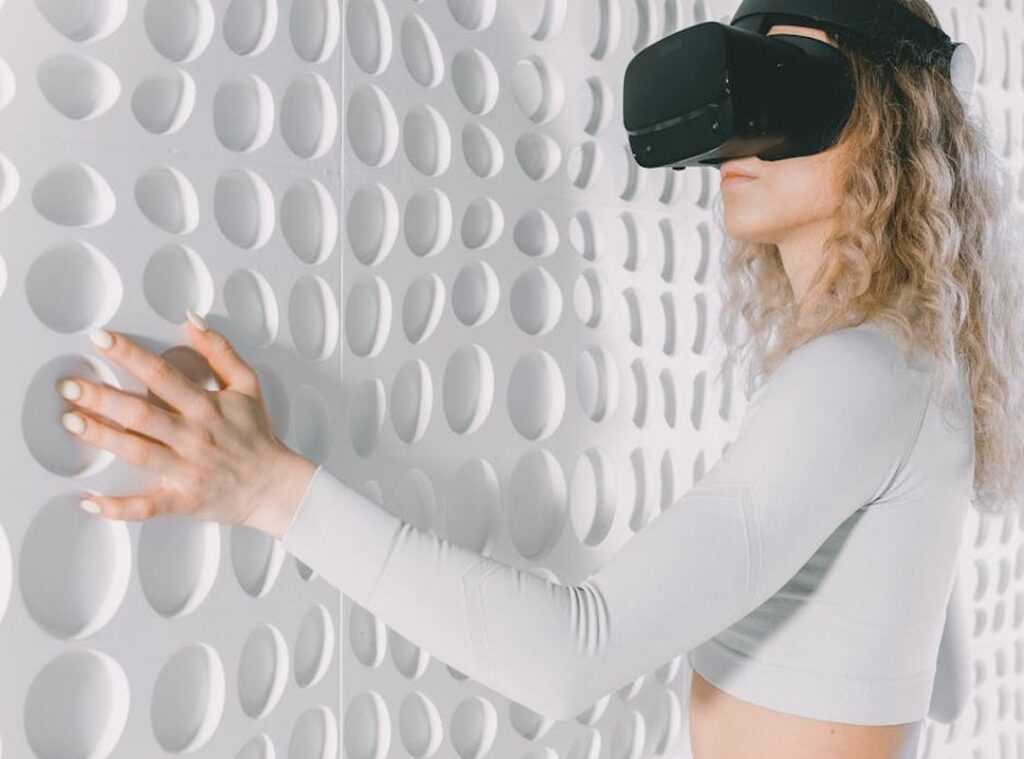

Ever feel stuck behind your keyboard or touchscreen? It’s like we’ve hit a wall with how we interact with tech. But what if controlling our digital world was as smooth as turning a doorknob?
Traditional interfaces are clunky, slowing us down.
the magic of gesture control interaction comes into play.
I’ve dug into the tech, the hardware, the software. It’s already revolutionizing how we live and work. This isn’t some far-off dream.
It’s happening now. I’ll break down how it works, who’s using it, and what’s next. Ready to step beyond the screen?
Motion-Based Control: The Click-Free Future
Motion-based control is the tech that lets you ditch the mouse and keyboard. Imagine controlling your computer with just a hand wave or a simple nod. It turns your physical intent into action.
No click needed.
This isn’t just some sci-fi nonsense. It’s here, and it’s changing the way we interact with devices. Gesture control interaction, for example, allows you to manipulate 3D models in an AR headset using only your hands.
It’s intuitive, almost like you’re a magician.
Then there’s eye-tracking. Ever thought of selecting icons just by looking at them? It’s a game-changer for accessibility, opening doors for those who find traditional inputs challenging.
And let’s not forget head and body tracking. Walking through a virtual world by simply turning your head changes everything. The core idea is to make tech so smooth it feels like an invisible extension of ourselves (just like in futuristic movies).
Curious about where this tech is heading with touch? You might want to learn more about the haptic feedback future touch interfaces. It’s a world where technology truly feels like a natural part of us.
The Magic Inside: How Machines Understand Movement
Ever wonder how your device seems to know exactly what you’re doing? It’s like magic, right? But it’s not.
It’s all about sensors. These are the system’s senses. They ‘see’ and ‘feel’ movement.
Think of accelerometers and gyroscopes. The backbone of controllers. They pick up every tiny twitch and translate it into data.
And let’s not forget computer vision. Using standard cameras, devices actually watch the world.
But data alone isn’t enough. It needs translating. Sensors generate a constant stream of information about position, orientation, and velocity.
Imagine the chaos without processing. This is where data gets crunched into usable math. It’s like baking a cake: the ingredients (data) mix with the right instructions (processing) to make something delicious (usable output).
Now, here’s where it truly gets fascinating: the AI ‘brain.’ This is the key step. Machine learning models take a mountain of data and sift through it to recognize patterns. Picture someone learning a dance move.
First, they flail around. Over time, they get it. The AI does the same, distinguishing between an intentional swipe and a random arm swing.
The more it learns, the sharper gesture control interaction becomes.
I mean, we’re basically teaching computers to understand our movements like you’d teach a dog tricks. Future tech might get even wilder. Imagine devices picking up on subtler cues, like mood from movement.
Exciting, isn’t it? Machines understanding us (helps) us interact better. What’s next?
Probably devices that anticipate our actions before we even move. Now that’s a future I want to see.
Beyond Gaming: Motion Control’s Impact Across Industries
Let’s get this straight: gesture control interaction isn’t just for video games. It’s transforming industries you wouldn’t expect. Take healthcare, for example.
Surgeons now use hand gestures to get through MRI scans during operations. This means no contamination risks from touching anything. And eye-tracking tech?
It gives a voice to those with paralysis, offering a new form of communication.
Now, think about cars. We all know the dangers of distractions while driving. But what if you could change the radio station or answer a call with a simple wave of your hand?
This isn’t sci-fi; it’s happening now. Gesture control keeps drivers focused on the road, reducing accidents.
On the factory floor, industrial workers have a new ally. Complex robotic arms, once the stuff of safety nightmares, are now guided by intuitive movements. This boosts efficiency but also makes manufacturing safer.
Who knew hand gestures could pack such a punch?
It’s like having a superpower in your toolbox.
And let’s not forget immersive design. Architects can now “walk through” digital blueprints using VR. They can tweak designs before construction even begins.
We’re not just talking about futuristic fantasies. These advancements are here, reshaping how industries operate. Curious about how this all bridges the physical and digital?
Check out ar interfaces bridging physical digital. Motion control is more than a game-changer. It’s a new reality.
The Next Frontier: Envisioning a Gesture-Driven World
Imagine a world where your environment bends to your will, responding to your every motion. You point at a speaker, and your favorite song flows through it. With a simple ‘hush’ gesture, the room’s volume drops.

This isn’t sci-fi. It’s ambient computing, a reality unfolding before us.
Gesture control is evolving. We’ve moved from exaggerated arm swings to subtle finger taps. These micro-gestures are the new frontier.
They’re becoming the norm for controlling wearables like smart glasses. It’s like we’ve taken a page out of a spy movie, where a mere twitch can initiate a command.
And let’s talk about haptics. It’s not just about waving your hand. It’s about feeling the digital world.
Imagine ‘clicking’ a virtual button and actually feeling it. You could even sense the texture of a virtual object. This is where the magic happens.
Then there’s the ultimate interface: Brain-Computer Interfaces (BCIs). Here, the gesture is just a thought. Imagine controlling devices with merely the intent to act.
It’s a far cry from where we started with gesture control interaction. This is the next step. Are you ready for it?
The Hurdles We Still Need to Leap
Gesture control interaction sounds slick, right? Until you try holding your arms up for an hour. The Gorilla Arm problem is real.
Physical fatigue sets in fast. We’ve all felt it. Unless you’re secretly a superhero.
Then there’s the Midas Touch problem. How do systems know the difference between a real command and me just scratching my nose? It’s a mess of intention versus accident.
And let’s not forget how awkward it feels to gesture in public. Seriously, will waving at my smart glasses ever not feel silly? Imagine explaining that to Grandma.
And what about the lack of a universal language? A ‘swipe up’ means one thing here and something totally different there. It’s like using a keyboard where every key does something unexpected.
We need a standard. Otherwise, it’s just confusion in a fancy package.
These challenges aren’t going away soon. But nailing them is key to making this tech truly viable.
The Future in Your Hands
You’ve come this far. You get it now. Gesture control interaction is not just some sci-fi dream. It’s real.
It’s happening. We’re ditching clunky buttons and moving toward natural, human gestures. This tech?
It’s not just a gadget; it’s a game changer. It makes life simpler, more connected.
Think about it. Imagine what you’ll do with this power. As it leaps from labs to living rooms, what’s your move?
Don’t just watch from the sidelines. Dive in. Start creating.
The future isn’t waiting. Take control. Ready to shape what’s next?
Visit fntkdevices.com and start today.
 Joseph Keyseringer writes the kind of device optimization techniques content that people actually send to each other. Not because it's flashy or controversial, but because it's the sort of thing where you read it and immediately think of three people who need to see it. Joseph has a talent for identifying the questions that a lot of people have but haven't quite figured out how to articulate yet — and then answering them properly.
They covers a lot of ground: Device Optimization Techniques, FNTK Hardware Engineering Insights, Tech Innovation Updates, and plenty of adjacent territory that doesn't always get treated with the same seriousness. The consistency across all of it is a certain kind of respect for the reader. Joseph doesn't assume people are stupid, and they doesn't assume they know everything either. They writes for someone who is genuinely trying to figure something out — because that's usually who's actually reading. That assumption shapes everything from how they structures an explanation to how much background they includes before getting to the point.
Beyond the practical stuff, there's something in Joseph's writing that reflects a real investment in the subject — not performed enthusiasm, but the kind of sustained interest that produces insight over time. They has been paying attention to device optimization techniques long enough that they notices things a more casual observer would miss. That depth shows up in the work in ways that are hard to fake.
Joseph Keyseringer writes the kind of device optimization techniques content that people actually send to each other. Not because it's flashy or controversial, but because it's the sort of thing where you read it and immediately think of three people who need to see it. Joseph has a talent for identifying the questions that a lot of people have but haven't quite figured out how to articulate yet — and then answering them properly.
They covers a lot of ground: Device Optimization Techniques, FNTK Hardware Engineering Insights, Tech Innovation Updates, and plenty of adjacent territory that doesn't always get treated with the same seriousness. The consistency across all of it is a certain kind of respect for the reader. Joseph doesn't assume people are stupid, and they doesn't assume they know everything either. They writes for someone who is genuinely trying to figure something out — because that's usually who's actually reading. That assumption shapes everything from how they structures an explanation to how much background they includes before getting to the point.
Beyond the practical stuff, there's something in Joseph's writing that reflects a real investment in the subject — not performed enthusiasm, but the kind of sustained interest that produces insight over time. They has been paying attention to device optimization techniques long enough that they notices things a more casual observer would miss. That depth shows up in the work in ways that are hard to fake.